18 November 2014 | Netzsch
NETZSCH Solutions for Ceramic Applications
Breaking the paradigm of submicron ceramic pigment suspensions.
For many years, it was widely accepted that Ceramic Pigments could not be ground into the submicron range (d99 < 1 µm) without a relevant loss of color strength and other physical properties. The widespread use of wet grinding technologies, such as ball mills (Alsing), or more recently, “attrition like” bead mills, led to extremely long processing times to achieve finer product results. As a result of this long grinding process, pigments were undoubtedly damaged to a certain degree, leading to the aforementioned paradigm of “ungrindability” of ceramic pigments below 1 micron.
The introduction of Ceramic Inkjet using drop-on-demand printing technologies pushed the leading technological companies in the field of milling to develop a process based on an optimal combination of dry and wet grinding techniques, to obtain suspensions of ceramic pigments in the sub-micron range (d50 0.15 µ - 0.3 µ / d99 0.6 µ - 0.8 µ). Over 45 million kgs of Ceramic Inkjet Ink supplied, and more than 3 thousand ceramic digital printers worldwide, confirm that this goal was successfully achieved.
The paradigm was broken, presenting new challenges and opportunities in grinding ceramic raw materials, glazes and other related products.
NETZSCH Solutions for Ceramic Applications
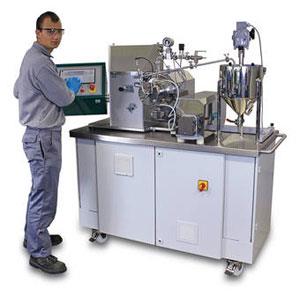
NETZSCH has always developed solutions to support inkjet technology. Since the first test batch on a LabStar laboratory mill in December 2005, NETZSCH has been at the forefront of this technology and the first subject matter expert when it comes to processing inkjet materials. Hundreds of NETZSCH machines are in use worldwide, producing ceramic inkjet pigments and in a wide array of other ceramic applications..
Through vast experience and continuing market leadership, NETZSCH is able to develop and select the best solution for every step of the process (e.g. pigment processing, mixing, wet grinding, etc.) in the production of digital glaze, ceramic inkjet, ceramic pigments, In-Glass ceramics inks, technical ceramics, minerals and raw materials and ceramic masses.