12 June 2024 | Plastics By Design
Basic vacuum forming packaging.
Vacuum formed packaging, also known as thermoformed packaging, is a manufacturing process used to create a variety of plastic products, including packaging materials.
Here's an overview of the process and its benefits:Process
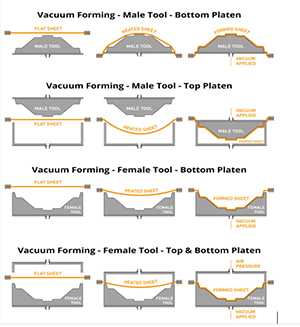
- Heating: A plastic sheet is heated until it becomes pliable.
- Forming: The heated plastic sheet is placed over a tool. A vacuum is then applied, pulling the plastic tightly against the tool, creating the desired shape.
- Cooling: The formed plastic is cooled to retain the shape.
- Trimming: The excess plastic is trimmed off, leaving the final product.
Materials Used
Common materials used in vacuum forming include:
• Polyethylene (PE)
• Polypropylene (PP)
• Polystyrene (PS)
• Polyvinyl Chloride (PVC)
• Polyethylene Terephthalate (PET)
Applications
Vacuum formed packaging is used across various industries due to its versatility and cost-effectiveness. Some common applications include:
- Blister packs: Often used for pharmaceuticals, electronics, and small consumer goods.
- Clamshell packaging: Used for food products, electronics, and other retail items.
- Trays: Used in food services, medical equipment, and industrial components transit trays.
- Custom packaging solutions: Tailored to specific products for protection and display purposes.
- Cost-Effective: The process is generally less expensive than other moulding methods, especially for small to medium production runs.
- Quick Turnaround: The moulds for vacuum forming can be produced relatively quickly, enabling faster production times.
- Design Flexibility: Allows for a wide range of shapes and sizes, making it suitable for custom packaging solutions.
- Durability and Protection: Provides excellent protection for products during shipping and handling.
- Visibility: Transparent materials can be used, which is beneficial for retail displays where product visibility is important.
Environmental Considerations
- Recyclability: Many of the materials used in vacuum forming are recyclable.
- Sustainability: Efforts are being made to use more eco-friendly materials and processes to reduce the environmental impact.