13 June 2025 | Hill Cross Furniture
Local Company Teams Up with Rivers Trust to Uproot Himalayan Balsam
North Yorkshire’s Hill Cross Furniture, a leading manufacturer of contract furniture, took part in its first conservation team away-day, a key element of its journey to net zero.
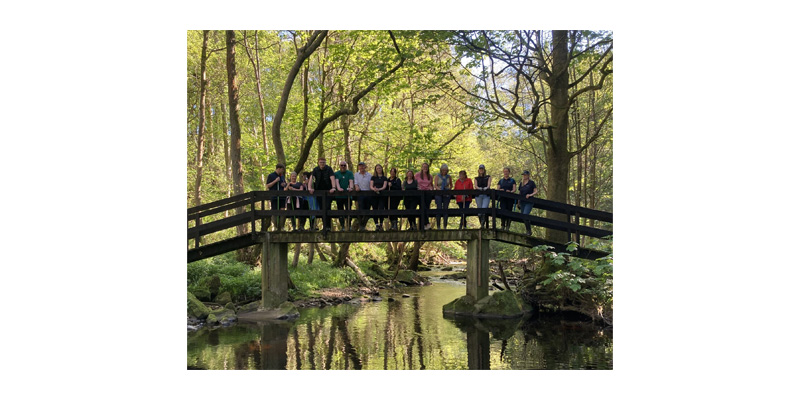
The day’s event, organised and led by Yorkshire Dales Rivers Trust (YDRT) as a corporate volunteering initiative, saw colleagues from across Hill Cross Furniture’s head office come together to help remove invasive non-native species (INNS), specifically Himalayan balsam, from the River Burn on the Swinton Estate near Masham.
Jennifer Lee, volunteer and engagement officer at YDRT said: “If left unchecked, invasive species such as Himalayan balsam and giant hogweed overwhelm our riverbanks, supressing native plants whose roots help bind the bankside together − a process that exacerbates erosion leading to sediment build up in our rivers, which is bad news for aquatic life and also increases the likelihood of flooding incidents. We are therefore very grateful to Hill Cross for supporting our charity in this way!”
Hill Cross founder Richard Barker added: “Our very first client 25 years ago was Swinton Park and it’s now where we off-set our carbon output, so it feels apt that we’ve returned to the estate for our first local conservation team away-day.
“We are already doing a lot operationally to reduce the carbon footprint of the business on our journey to net zero, but we love to learn and get the whole team involved, so getting everyone out in their wellies and into nature to learn about rivers and make a hands-on difference feels worthwhile.”
The removal of Himalayan balsam, once accurately identified, is a relatively easy job and the perfect introduction to INNS removal. Since the plant puts all its effort into growing tall (up to 3m tall) its roots are shallow and easy to pull and its stem feels almost hollow. The best strategy for long term eradication is a top-down removal, starting at the top of a river catchment and systemically working down through all its streams and tributaries. A pre-flowering Himalayan balsam can be recognised by its hollow, sappy, fleshy stem, shallow ‘easy to pull’ roots and ‘four leaf’ clover type arrangement of leaves.
To find out more about volunteering as an individual or as a corporate event visit: www.ydrt.org.uk/support-us/