30 July 2025 | Glass Partitions Direct
Sliding vs. Hinged Glass Doors: Advantages, Disadvantages and Ideal Applications
Glass doors have become a hallmark of modern architecture, offering a seamless blend of aesthetics, natural light, and spatial flow. Whether you’re renovating a home, designing a new office, or upgrading a commercial space, choosing between sliding and hinged glass doors can significantly impact both function and form. In this article, we’ll break down the key advantages, disadvantages, and ideal uses for each option to help you make an informed decision.
Sliding Glass Doors
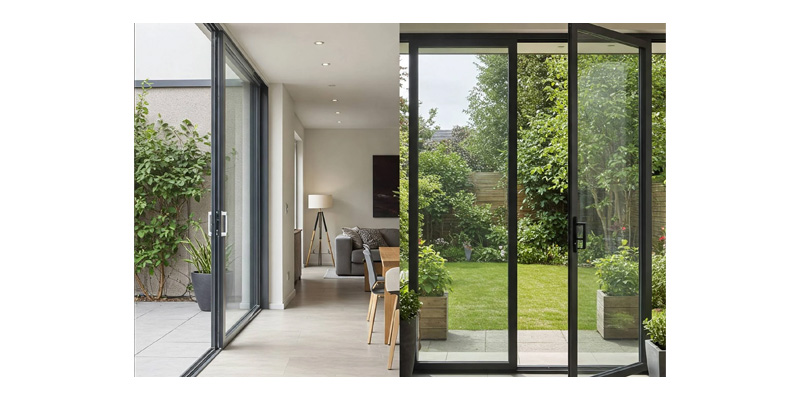
Sliding glass doors operate on a horizontal track system, allowing one or more panels to glide open effortlessly. This design makes them a go-to choice for spaces like patios, balconies, or compact rooms where saving space is essential.
One of the standout advantages of sliding doors is their space-efficient design—since they don’t swing open, they’re ideal for areas with limited clearance. Their large glass panels also provide uninterrupted views and flood interiors with natural light, making them perfect for connecting indoor living areas to outdoor spaces like decks or gardens. The sleek, modern aesthetic and smooth operation align well with contemporary architecture.
However, sliding doors typically offer a limited opening width, as only one panel slides at a time. They also require regular track maintenance to ensure smooth movement and can be less secure without advanced locking systems.
Ideal Applications
- Apartments or homes with limited floor space
- Contemporary or minimalist interior designs
- Patio, balcony, or backyard entrances
- Spaces that prioritize light and views
Hinged Glass Doors
Hinged glass doors, often seen as single or double French doors, swing open on fixed hinges and offer a more traditional yet versatile look. Unlike sliding doors, they allow for full-width access, making it easier to move large items or facilitate high foot traffic.
These doors are available in a wide range of styles, from rustic and classic to modern with clean framing, offering more design flexibility. Their tighter seal also tends to provide better insulation, and they usually accommodate more secure locking systems, making them a preferred choice for main entryways.
On the downside, hinged doors require ample clearance to swing open, which may not be practical in smaller spaces. When open, they can also obstruct walkways or furniture, depending on placement.
Ideal Applications
- Main entryways or garden doors
- Traditional or transitional interior styles
- Larger rooms where door clearance isn't an issue
- Spaces needing full access for furniture or high foot traffic
Final Thoughts
Both sliding and hinged glass doors offer unique advantages depending on your space and style. Sliding doors are perfect for compact, modern spaces with a focus on views and flow, while hinged doors offer timeless design and greater accessibility. When choosing, consider:
- How much space is available for the door to operate
- Whether you prioritize aesthetics, function, or both
- How often the door will be used and by whom
Still undecided? Consult a door or glass specialist to evaluate your space and provide personalized recommendations.