31 July 2025 | Dräger Safety UK Ltd
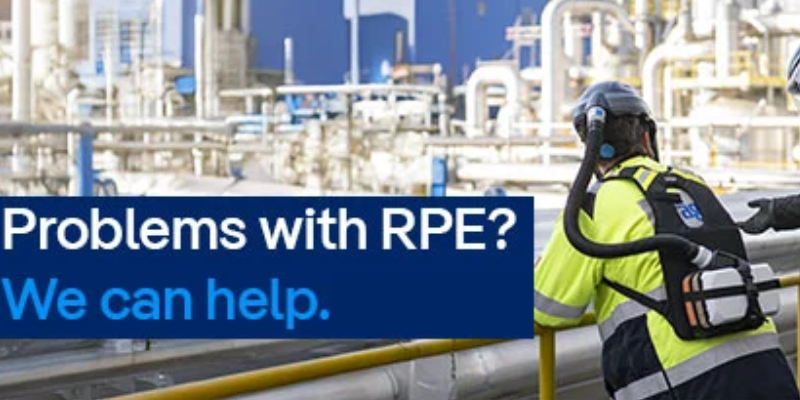
Problems with RPE?
If you've chosen RPE that is adequate to protect against respiratory hazards but you’re still having problems, then it may be that you need to look at whether it’s also suitable for the wearer, the task and the environment. We help with the suitability factors causing issues.
The Wearer:
Facial Hair and Markings- Beards, stubble, cuts, scars wrinkles and piercings can affect the tight seal to the face. Loose fitting head pieces such as hoods or helmets are the answer here as they don’t require a tight seal.
Diverse Facial Dimension- Different face sizes and shapes can make a good fit and tight seal challenging. Choose RPE that’s available in different sizes, contains features that enable fitting and / or is designed to accommodate movement.
Corrective Eyewear- FFP & half masks must be fit-tested with both corrective & protective eyewear in place. Full face masks can’t be worn with corrective spectacles as their arms compromise the seal, solutions include spectacle frames or PAPR headpieces that can accommodate specs and can feature integral face and eye protection.
Compatible PPE and RPE- If other head worn PPE such as safety helmets, face, eye and hearing protection is needed, this may interfere with the RPE being worn. Ideally choose RPE with combined or ‘integrated’ protection such as head protection, visors, and earmuffs.
Higher Levels of Physical Activity- Higher work rates can lead to increased breathing rates and sweating which may cause facepieces to slip and/or leak. For medium to high work rates powered air or breathing apparatus could be more comfortable.
Over 1-Hour Continuous Use- The HSE advise continuous wear time for unpowered, tight-fitting RPE of less than 1 hour, as masks can become uncomfortable and removed or loosened. Powered air or airline respirators are recommended for longer periods.
Abnormal Temperatures/Humidity- In environments that are hot and/or humid, wearing RPE can contribute to increased sweating, heat stress and discomfort. Powered respirators that supply filtered, cold air through a loose fitting headpiece could improve comfort.
Explosive Atmospheres- Flammable or combustible gases, vapours or dusts can lead to potentially explosive atmospheres where some RPE could pose an ignition risk. Intrinsically safe powered air units with anti-static components may be a solution.