29 August 2025 | The Fume Cupboard Company
Fumehood or Fume Cupboard? What’s the Difference?
What’s the Difference? If you’ve been searching for terms like “what is a fume cupboard” or “fumehood installation,” you might be wondering whether there’s any real difference between the two. The answer? It depends who you ask — and which side of the Atlantic you’re on.
Let’s break it down.
What Is a Fume Cupboard?
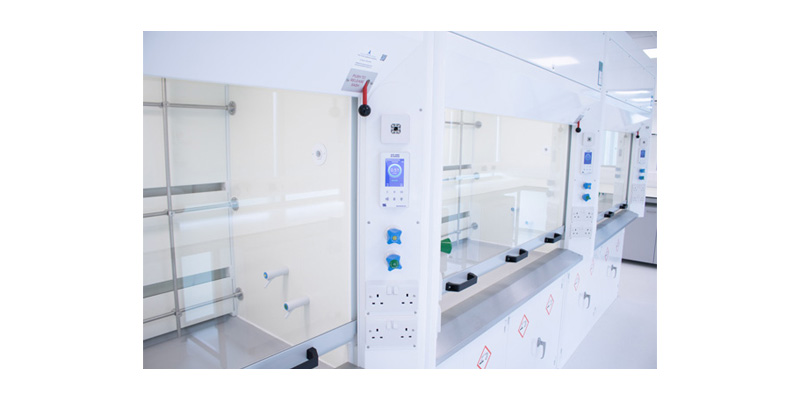
A fume cupboard is a ventilated enclosure used in laboratories to protect users from inhaling harmful vapours, gases, or dust during experiments or chemical handling.
By drawing air away from the operator and filtering or exhausting it safely, the fume cupboard provides both a physical and airflow-based barrier, keeping hazardous substances out of the breathing zone.
Fume cupboards are a staple in labs across the UK — from schools and universities to research centres, healthcare labs, and industrial R&D facilities.
So What’s a Fumehood?
“Fumehood” (or fume hood) is simply the North American term for the same piece of equipment.
In the USA and Canada, you’ll typically hear lab users refer to a “fume hood,” whereas in the UK and most Commonwealth countries, we say “fume cupboard.”
Same purpose. Similar construction. Just different regional terminology.
UK vs US Design Standards
While fume cupboards and fume hoods do the same job, there are some differences in terms of standards, terminology, and design preferences:
Feature | UK (Fume Cupboard) | USA (Fume Hood) |
Common Standard | BS EN 14175 | ASHRAE 110 |
Terminology | Fume Cupboard | Fume Hood / Fumehood |
Common Setup | Ducted or Ductless, with integrated services | Often ducted, with sash position indicators |
Airflow Control | VAV or CAV systems | Typically includes bypass or VAV control |
Regional Use | UK, Ireland, Commonwealth countries | USA, Canada |
When Do You Need a Fume Cupboard?
Whether you call it a fume cupboard or a fumehood, you should always use one when:
- Handling volatile chemicals or solvents
- Mixing or diluting acids and reagents
- Working with toxic fumes, carcinogens, or hazardous dust
- Carrying out experiments with potential gas release or splash risk
A fume cupboard isn’t just good practice — it’s often a legal requirement under health and safety regulations such as COSHH in the UK.
Ducted vs Ductless Fume Cupboards
One question we often get is: What’s the difference between ducted and ductless fume cupboards?
Ducted Fume Cupboards:
- Extract air to the outside via ductwork
- Suitable for high-risk or high-use applications
- Typically used in chemistry labs, industrial settings, and universities
Ductless (Recirculating) Fume Cupboards:
- Use activated carbon or HEPA filters
- Filter air before recirculating it back into the room
- Suitable for mobile labs, education settings, or low-risk substances
Choosing the right setup depends on your building layout, the chemicals you’re using, and the level of protection required.
Summary: Fume Cupboard or Fumehood?
Term | Region | Meaning |
Fume Cupboard | UK/Commonwealth | A ventilated lab enclosure for chemical safety |
Fumehood | US/Canada | Same thing, different name |
So whether you’re specifying a fumehood in Boston or upgrading a fume cupboard in Birmingham, the purpose remains the same: to protect people and promote lab safety.
Need Help Specifying the Right System?
At The Fume Cupboard Company Ltd, we’ve been engineering clean air, one lab at a time, for decades.
Whether you’re refurbishing a teaching lab or installing extraction systems for advanced R&D, we’re here to support you — from design and supply to installation, servicing, and compliance.