08 October 2025 | Britannia Stone
Why Reclaimed Stone Is a Low-Carbon Alternative in Modern Construction
Reclaimed stone offers one of the most effective ways to cut embodied carbon in construction. By re-using stone already in existence, Britannia Stone helps projects lower emissions, meet BREEAM and ESG goals, and build sustainably without compromising strength, quality, or architectural character.
Introduction: Why Embodied Carbon Matters
Across the construction industry, environmental performance is under increasing scrutiny. One of the biggest contributors to a building’s total environmental impact is embodied carbon — the carbon emissions associated with extracting, processing, transporting, and manufacturing construction materials.
As architects, builders, and specifiers seek practical ways to meet sustainability targets, reclaimed stone has become a compelling solution. By re-using stone already in existence, projects can dramatically cut embodied-carbon figures while retaining the authenticity, strength, and aesthetic quality for which natural stone is prized.
What Is Embodied Carbon in Stone Construction?
Embodied carbon covers every stage of a material’s life before it reaches site — from quarrying and cutting to finishing and distribution. For newly quarried stone, these processes rely heavily on fuel-intensive machinery and long-distance transport, adding significantly to a project’s footprint.
Reclaimed stone, on the other hand, is salvaged from existing buildings and infrastructure. Its original carbon cost has already been “paid.” By re-using it, designers eliminate the need for new extraction and energy-intensive processing, creating immediate carbon savings.
How Reclaimed Stone Minimises Carbon Impact
1. No Quarrying or Processing
Reclaimed stone bypasses energy-heavy extraction and cutting, avoiding the emissions and environmental disturbance associated with new quarrying.
2. Reduced Transport Emissions
When sourced locally, reclaimed stone often travels only a fraction of the distance of imported material, sharply reducing fuel consumption and CO₂ output.
3. Longevity and Durability
Many reclaimed stones are centuries old. Their proven resilience means fewer replacements over time — a further reduction in lifetime carbon impact.
Independent lifecycle assessments indicate reclaimed stone can reduce embodied carbon by up to 80–90 percent compared with newly quarried equivalents, depending on sourcing distance and preparation method.
Reclaimed Yorkstone: A Smart Choice for Sustainable Building
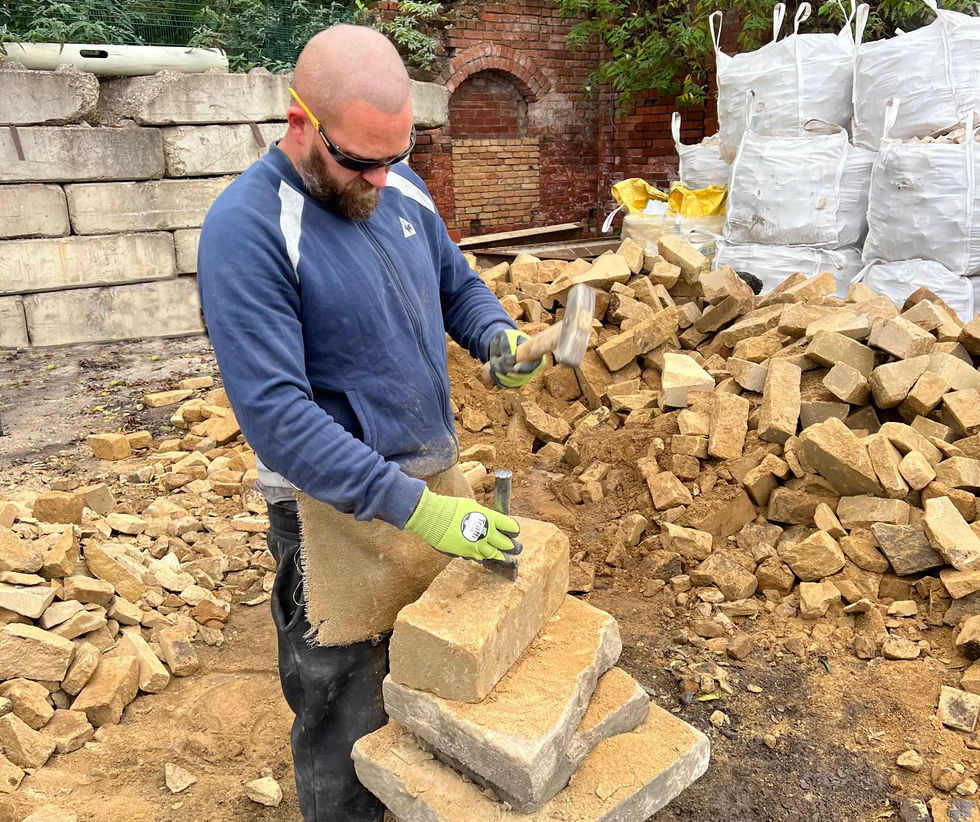
Yorkstone remains one of Britain’s most iconic and enduring paving materials. At Britannia Stone Company, our reclaimed Yorkstone paving and steps are hand-salvaged from historic streets, buildings, and industrial sites across the UK.
Each piece is carefully inspected, cleaned, and prepared for reuse — without the need for new quarrying or high-energy reprocessing. The result is one of the lowest-carbon paving options available, offering timeless character, excellent weather resistance, and long-term durability.
Real-World Carbon Impact
Britannia Stone’s reclamation work already diverts substantial material from landfill. In 2024 alone, more than 5,800 tonnes of stone were recovered and re-introduced into circulation. Every tonne reused represents carbon emissions avoided — the equivalent of preventing the quarrying, cutting, and shipping of new stone.
Across comparable projects, embodied-carbon reductions of 70 to 95 percent have been recorded when reclaimed stone replaces newly produced alternatives — especially when local supply chains and minimal cleaning processes are used.
Beyond paving, reclaimed materials such as random walling stone and stone cobble setts deliver similar environmental gains while preserving regional building character.
Supporting BREEAM, LEED & Green Building Standards
Specifying reclaimed stone can directly contribute to recognised sustainability frameworks, including:
BREEAM: credits under MAT 01 (Life Cycle Impacts), WST 01 (Construction Waste Management), and MAN 02 (Responsible Construction Practices).
LEED v4: acknowledgement within Building Life-Cycle Impact Reduction.
Because reclaimed stone involves no new resource extraction, it aligns perfectly with circular-economy principles and low-impact building models. Many architects and contractors use Britannia Stone’s data and documentation to support planning submissions, BREEAM evidence packs, and ESG reporting.
For a deeper overview of our environmental commitments, visit the Britannia Stone Sustainability Hub.
Related Reading
If you are exploring broader sustainability topics, these companion articles may be useful:
Encapsulated Carbon: Why Reclaimed Stone Is a Low-Impact Building Choice
How Reclaimed Stone Supports ESG Goals in Sustainable Construction
Conclusion: Building Responsibly with Reclaimed Stone
The construction sector faces growing pressure to adopt circular, low-carbon practices — and materials are central to that change. Reclaimed stone provides an immediate, proven route to reducing embodied carbon without sacrificing performance or beauty.
By choosing reclaimed Yorkstone, walling stone, or cobble setts from Britannia Stone, specifiers and builders can make measurable environmental improvements while maintaining the integrity of traditional architecture.
Whether the goal is a conservation restoration, a landscape redevelopment, or a contemporary sustainable build, reclaimed stone offers both ecological and aesthetic value — a genuine step toward a lower-carbon future for UK construction.