29 October 2025 | Hedging Plants Direct
Laurel in Autumn – The Best Time to Plant and Care for Your Hedge
Discover why autumn is the best time to plant and maintain strong, healthy Laurel hedging
Autumn is one of the most important seasons in the life of a Laurel hedge. As the temperature drops and rainfall increases, the soil stays warm enough for strong root development — making it the perfect time to plant new Laurel hedging or give established plants some seasonal attention.
Whether you’re planning to grow Cherry Laurel (Prunus laurocerasus ‘Rotundifolia’), Portuguese Laurel (Prunus lusitanica), or Bay Laurel (Laurus nobilis), autumn offers the best natural conditions for successful planting and establishment. It’s also the time when your existing Laurel hedge plants benefit most from feeding, mulching, and a little end-of-season care.
Why Autumn Is the Best Time to Plant Laurel Hedging
Ideal Conditions for Strong Root Growth
Autumn’s combination of warm soil and consistent moisture is exactly what Laurel plants need to develop deep, healthy roots. By planting now, roots will continue to grow through winter, giving your Laurel hedges a head start before spring. Because the air is cooler, water loss through the leaves is reduced, meaning less stress for new Laurel plants and less watering required for you. The result? Faster establishment, better survival rates, and lusher growth next year.
Choosing the Right Root Type for Autumn Planting
Bare Root Laurel Hedging
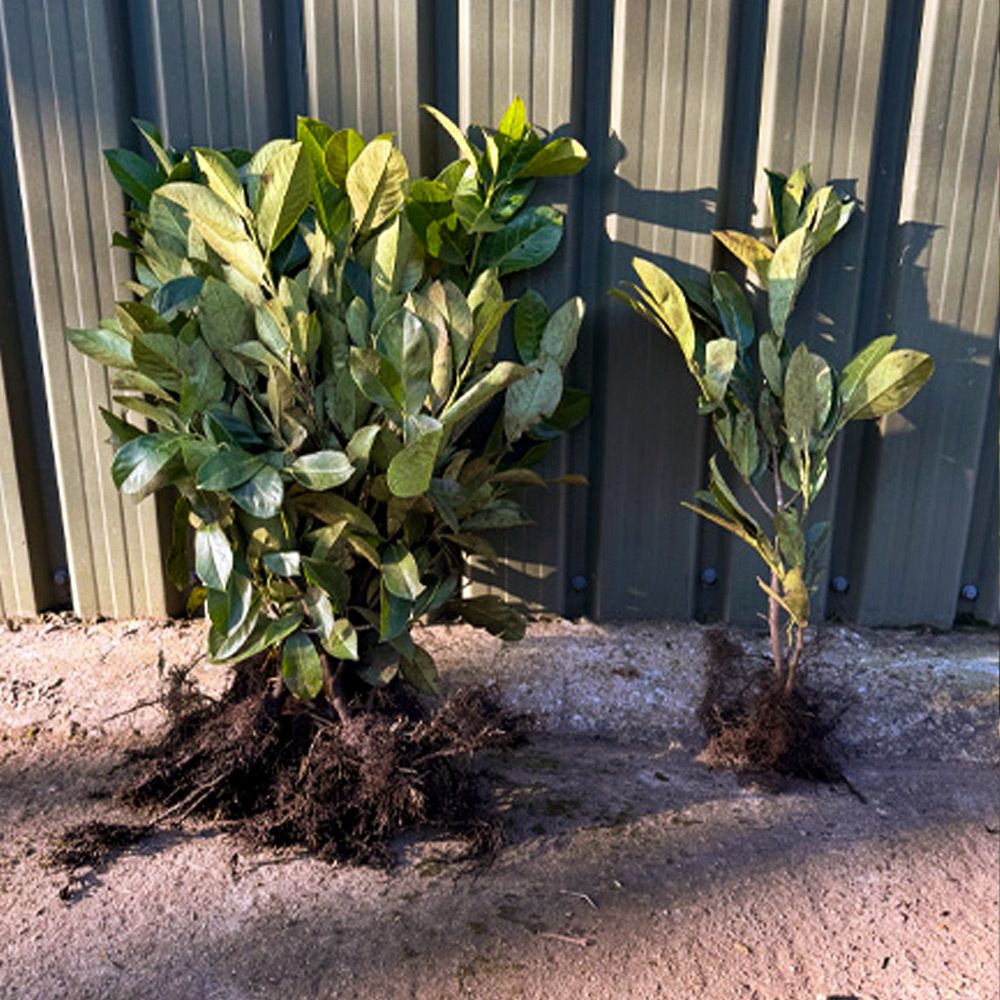
For cost-effective, large-scale planting, bare root Laurel hedging is ideal between November and March when plants are dormant. Bare root Laurels are lightweight, easy to handle, and quick to establish once planted in moist, well-prepared soil.
Rootballed Laurel Hedging
If you want instant impact, rootballed Laurel hedging is the professional grower’s choice. Grown in open ground and lifted carefully with soil around their roots, these plants arrive ready to thrive when planted straight away in autumn.
Pot-Grown Laurel Plants
Pot-grown Laurels can be planted at any time of year, but autumn offers the least maintenance and the fastest root establishment. They’re ideal for smaller projects or for topping up existing hedges where gaps have appeared.
How to Plant a Laurel Hedge in Autumn
A successful hedge starts with good preparation. For detailed step-by-step instructions, see our full guide: How to Plant a Laurel Hedge.
Ground Preparation
Dig over the planting area to loosen compacted soil and remove any weeds. Laurels prefer fertile, free-draining ground, so mix in well-rotted compost or organic matter where needed.
Space Laurel hedge plants roughly 2 to 3 per metre depending on the variety and the density you’d like. Use a line or string guide to keep your hedge straight and evenly spaced.
Boost Establishment with RootGrow
Sprinkle RootGrow Mycorrhizal Fungi directly into each planting hole. These beneficial fungi attach to the roots, helping young Laurel plants absorb water and nutrients more efficiently. It’s a simple, one-time application that can make a big difference to early growth — especially in the cooler months.
Watering and Mulching
After planting, water thoroughly and apply a 5–8 cm layer of bark mulch or compost around the base. This helps regulate soil temperature and moisture through the winter while discouraging weeds.
Autumn & Winter Care for Established Laurel Hedges
Even mature Laurel hedges appreciate a little seasonal care to stay healthy and green through the colder months.
Feeding for Root Strength
In late autumn, apply Hedge Feed around the base of your Laurel hedge plants. This long-lasting granular fertiliser slowly releases essential nutrients that support root health over winter, without encouraging soft new growth that could be damaged by frost.
A balanced feed now will reward you with richer foliage and improved disease resistance next spring.
Irrigation and Moisture Management
Following the UK’s dry spring and summer, it’s worth checking soil moisture before winter sets in. Installing a simple Hedge Irrigation system ensures water is delivered directly to the roots — particularly important for recently planted Laurel hedging or south-facing gardens where the ground dries quickly.
Light Pruning and Tidying
Avoid heavy pruning in late autumn, but remove any damaged or wind-rocked branches. A light trim keeps the hedge tidy and helps prevent wind damage. Save shaping or reduction pruning for late spring once frost risk has passed.See our guide: How to Prune a Laurel Hedge.
Autumn & Winter Care for Established Laurel Hedges
Even mature Laurel hedges appreciate a little seasonal care to stay healthy and green through the colder months.
Feeding for Root Strength
In late autumn, apply Hedge Feed around the base of your Laurel hedge plants. This long-lasting granular fertiliser slowly releases essential nutrients that support root health over winter, without encouraging soft new growth that could be damaged by frost.
A balanced feed now will reward you with richer foliage and improved disease resistance next spring.
Irrigation and Moisture Management
Following the UK’s dry spring and summer, it’s worth checking soil moisture before winter sets in. Installing a simple Hedge Irrigation system ensures water is delivered directly to the roots — particularly important for recently planted Laurel hedging or south-facing gardens where the ground dries quickly.
Light Pruning and Tidying
Avoid heavy pruning in late autumn, but remove any damaged or wind-rocked branches. A light trim keeps the hedge tidy and helps prevent wind damage. Save shaping or reduction pruning for late spring once frost risk has passed.See our guide: How to Prune a Laurel Hedge.
Common Autumn Issues With Laurel
Yellowing Leaves
Occasional yellow leaves are perfectly normal as old growth sheds, but widespread yellowing can signal over-watering or poor drainage. Ensure the soil remains free-draining and feed lightly in spring to encourage healthy green growth.
Wind Scorch and Frost Damage
Strong winter winds can cause Laurel leaves to brown or curl at the edges — particularly on newly planted hedges. Protect exposed areas with windbreak netting or hessian until plants are well established. Light frost may mark outer leaves but rarely causes lasting damage.
Pests and Diseases
Look out for shot-hole disease (small holes in leaves) or scale insects that leave sticky deposits. Both are manageable with light pruning and improved airflow. For detailed advice, visit Common Problems With Laurel Hedges.