
16 December 2025 | Newton Waterproofing
Protecting Your Project During Cold-Weather Application: A Guide for Specifiers & Contractors
Cold weather waterproofing becomes crucial as temperatures drop across the UK, as waterproofing installations face increased risk. Cold weather slows curing, thickens liquid products, and creates condensation and frost. All can compromise performance and lead to costly failures.
This guide provides clear, practical advice on planning, product selection, and environmental control to ensure waterproofing performance throughout winter, particularly focusing on how to effectively manage cold weather waterproofing.
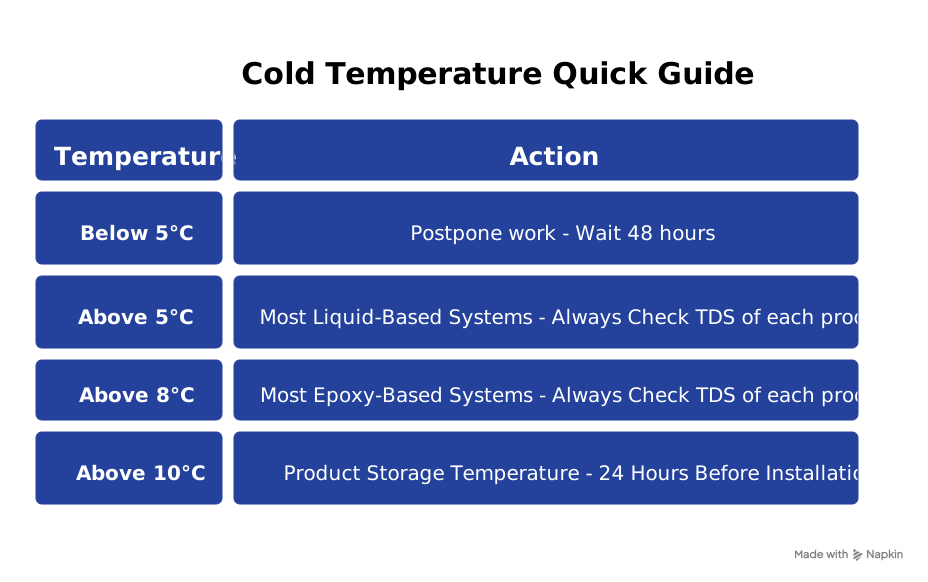
How Cold Weather Affects Waterproofing Systems
Low ambient and substrate temperatures have several impacts on cold weather applications:
- Slower curing – Chemical reactions and hydration processes take longer in liquid, bituminous, and cementitious systems.
- Higher viscosity – Epoxies, polyurethanes, and bituminous products thicken in the cold, making detailing and application more difficult.
- Condensation – Cold surfaces attract moisture, preventing proper bonding.
- Frost or ice – Frozen substrates create a complete barrier, making application impossible.
Bituminous Systems
(HydroBond 109-LM, HydroBond SA, HydroBond 2K-Flex)
Increased viscosity during cold weather complicates bituminous system application, making waterproofing more challenging.
Best Practice:
- Store indoors in ambient temperatures of 10–20°C. Do not expose to freezing conditions.
- Apply only when air and substrate meet minimum temperature requirements.
- Avoid application to substrates below 5°C.
- Ensure surfaces are dry and free of frost or condensation.
- Allow extended curing time and protect from moisture and freezing.
Cementitious Systems
(HydroCoat 103 2K, HydroCoat 107 Elastic 2K, HydroCoat 203-RM, HydroCoat 1 System)
Hydration slows in cold weather and risks failure if freezing occurs early, underscoring the importance of effective waterproofing.
Best Practice:
- Only use when temperatures meet the minimum values listed in the technical data sheet.
- Pre-warm substrates when possible.
- Maintain substrate moisture, but avoid frost, standing water and rapid cooling at all costs.
- Protect exposed areas with insulated coverings.
- Avoid application to substrates below 5°C.
Temperature Monitoring Is Essential
During cold weather waterproofing projects, measure both ambient and substrate temperatures with an infrared thermometer, ensuring they remain above the minimum requirement for at least 48 hours before applying products.
Surface Preparation
Do not start work if there is frost or ice present. Wait until the substrate temperature is at least 5°C and rising and remaining above the minimum requirement for 48 hours. Check moisture levels and repair any defects before installation. Thorough preparation significantly reduces the risk of failure in winter. Effective surface preparation is critical for cold weather waterproofing success.
Environmental Control
Use tents, enclosures, or tarpaulins to shield working areas and maintain stable temperatures with indirect heaters; never apply direct heat to fresh coatings. Protect installations from rain, snow and condensation, and monitor curing closely, allowing extra time where needed.
When to Postpone Work
Pause installation if:
- Temperatures drop below 5°C (or reach 0°C overnight).
- There is a freeze–thaw risk in the first 24–48 hours.
- The minimum curing temperature cannot be maintained.
Delaying work in these situations prevents costly remediation later. Avoid risks by managing cold weather waterproofing effectively.
Cold-Weather Waterproofing Checklist
✔ Store products at 10–20°C for 24 hours before use✔ Confirm substrate temperature meets TDS requirements✔ Avoid installation in freezing conditions✔ Work late morning to early afternoon✔ Mix only what can be applied immediately✔ Protect installations from moisture and frost✔ Use curing membranes for cementitious systems✔ Contact Newton Technical for project-specific guidance✔ Follow product-specific instructions
Consistent application of this checklist supports successful cold weather waterproofing.
Need Expert Guidance for Cold-Weather Waterproofing?
Winter conditions can impact installation quality. Our Technical Team can provide tailored support, temperature-specific product advice, and project-specific guidance to ensure your waterproofing system performs throughout the cold season, including expert advice on tackling cold weather waterproofing challenges.
Contact Newton Waterproofing’s Technical Team for expert recommendations. You can reach us by calling our Tonbridge or Leeds offices or emailing us directly.
Cold-Weather Waterproofing FAQ
What is the minimum temperature required to install waterproofing systems?
Always check the product technical data sheet (TDS). Most liquid systems require >5°C; epoxies often need >8°C.
Can waterproofing be applied to frozen substrates?
No. All surfaces must be clean, dry, and frost-free for proper adhesion part of the cold weather waterproofing process.
Does curing take longer in cold weather?
Yes, curing can take up to twice as long, depending on temperature and humidity.
Can I use heaters to warm the substrate?
Yes, but use only indirect heat. Never heat the product or surface directly. This is critical during the cold weather waterproofing process.
Is a cold-weather application safe if temperatures rise during the day?
Only if temperatures remain above the minimum for the entire curing period, including overnight.