03 February 2026 | IT Cleaning Ltd.
IT Cleaning Ltd Magazine Article DCNN Winter 2025
Contamination within data centres represents a largely hidden but measurable contributor to energy inefficiency. Particulate and gaseous contaminants interfere with thermal management, airflow dynamics, and electrical performance, increasing both IT and mechanical power demand. Fouled heat-transfer surfaces reduce cooling efficiency, driving higher fan speeds and elevated cooling loads, while restricted airflow increases static pressure and air-handling energy consumption.
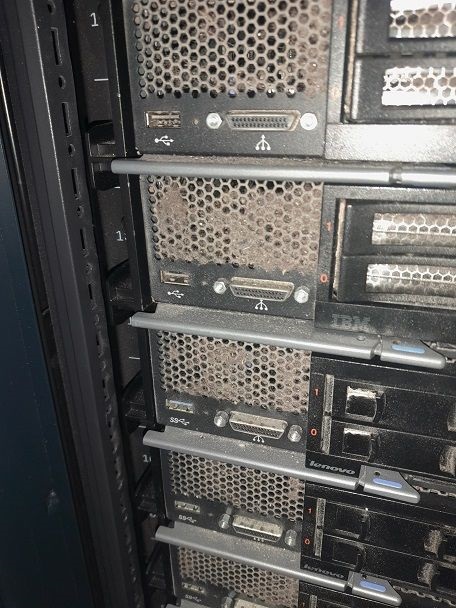
Data centre energy efficiency is typically evaluated through metrics such as Power Usage Effectiveness (PUE), cooling system coefficient of performance (COP), and airflow management efficiency. Operators invest heavily in high-efficiency chillers, hot- and cold-aisle containment, economisation strategies, and intelligent building management systems to reduce energy overhead. However, one variable with a direct, quantifiable impact on all of these systems is often under-represented in efficiency modelling: environmental contamination.Contamination within data centres includes particulate matter (PM2.5 and PM10), conductive and corrosive dust, hygroscopic salts, metal ions. These contaminants originate from external air ingress, construction activities, degraded building materials, and routine human occupancy. Once introduced, they accumulate on server heat sinks, printed circuit boards, power distribution units, and cooling infrastructure, altering both thermal and electrical performance.
From a thermal perspective, particulate contamination reduces convective heat transfer by insulating critical heat-exchange surfaces. Fouled heat sinks and coil fins exhibit lower thermal conductivity, forcing server fans to increase rotational speed to maintain component temperatures. This rise in fan power consumption, which scales non-linearly with speed, can significantly increase IT load energy. In parallel, restricted airflow across cooling coils and raised floor plenums increases static pressure, driving additional energy demand from air handling units and CRAH/CRAC fans.
Contamination also degrades the performance of economisation and free-cooling strategies. Airside economisers rely on consistent filtration and low particulate loads to operate efficiently. As filters become loaded with fine particulates, pressure drop increases, elevating fan energy requirements and shortening filter life. In some cases, economiser operating windows are reduced or disabled entirely due to contamination risk, forcing a return to more energy-intensive mechanical cooling.
Critically, the energy penalty associated with contamination is rarely detected through standard monitoring. Temperature and humidity may remain within specification while energy consumption rises incrementally, masking the root cause. Without contamination monitoring and targeted cleaning regimes aligned with ISO 14644-1 2022 operators risk losing the efficiency gains delivered by advanced cooling and airflow designs.
Understanding contamination as an energy variable — rather than solely a cleanliness or reliability concern — allows data centre operators to address an often invisible but persistent source of inefficiency. Effective contamination control reduces parasitic energy loads, stabilises thermal performance, and protects the long-term efficiency of both IT and mechanical systems.