16 February 2026 | RRC International
The Importance of Sustainable Development for Businesses
The UK Government’s 25 Year Environment Plan recognises these limits and places attention on the renewal of air, water, soil and the living world. For businesses, this shift is not an external pressure. It is a sign of the times. It signals that future success grows from responsibility rather than from unchecked expansion.
Sustainable development invites a different way of seeing business. It asks organisations to recognise that their actions unfold within a larger relationship with nature, society and future generations. It moves thought away from short term gain and toward long term balance. It calls for clarity, patience and attentiveness. These qualities become essential as customers seek ethical practice, investors ask for transparency, and employees look for workplaces that reflect shared values.
Education supports this change. Understanding sustainability isn’t automatic. It requires learning, reflection and the cultivation of new skills. RRC’s Environmental and Sustainability Courses provide a great foundation. They offer guidance for professionals who want to develop a deeper and more thoughtful approach to environmental management and sustainable development.
What Is Sustainable Development?
Sustainable development is best defined through the words of the Brundtland Report of 1987. It describes development that meets the needs of the present without limiting the ability of future generations to meet their own needs. This sentence might be simple, but it contains an ethic of care.
For businesses, sustainable development provides a framework that balances economic activity with environmental integrity and social wellbeing; offering a way to align ambition with responsibility. As pressure on global systems increases, this balance is becoming increasingly essential.
The Growing Importance of Sustainable Development in Business
The world of business has changed. Sustainability isn’t just a nice-to-have or something outside the strategy anymore. It’s become part of the very fabric of risk, reputation, and resilience.
Climate events disrupt supply chains. Scarce resources push up costs. New regulations appear. Stakeholders demand transparency. Customers want authenticity. Investors are paying attention to environmental and social performance. Employees are looking for workplaces that stand for something.
These pressures don’t hit all at once. They build quietly, almost like layers of sediment, shaping the future of organisations over time. That’s where sustainable development comes in, it helps businesses respond with clarity and foresight.
Its importance shows up in many areas. Climate-related risks affect stability and long-term planning. Regulations keep growing and require active attention. Markets increasingly favour ethical practices and conscious consumption. Investors evaluate environmental, social, and governance performance. And employees want meaningful work in organisations they can trust.
In all of these areas, sustainability isn’t just about avoiding risk, it’s about finding opportunity. It sparks innovation, builds resilience, and creates long-term value for the business and the world around it.
The Three Pillars of Sustainable Development
Sustainable development is built on three interconnected pillars: environmental sustainability, social sustainability, and economic sustainability. Together, they create a balanced approach that guides responsible business practices.
Environmental Sustainability
Environmental sustainability is all about protecting the natural systems we rely on. It means using resources carefully, reducing waste and pollution, and helping maintain climate stability.
For businesses, this matters in many ways. Regulations require responsible practices. Using energy and materials efficiently can lower costs. Climate impacts can create operational risks, and increasingly, customers pay attention to how environmentally responsible a company is.
Examples include the use of renewable energy, the adoption of circular practices, the improvement of energy efficiency and the implementation of ISO 14001 through RRC’s ISO 14001 Courses.
Social Sustainability
Social sustainability concerns the wellbeing of people, considering fairness, safety, health, inclusion and community. It recognises that an organisation doesn’t exist in a vacuum, but instead, within a network of relationships.
Its relevance to business includes higher employee engagement and retention, more resilient and ethical supply chains, reduced reputational risk and stronger connections with communities.
Examples include training and wellbeing initiatives, ethical sourcing, community partnerships and the creation of inclusive workplaces.
Economic Sustainability
Economic sustainability is about creating value that lasts. It encourages businesses to shift focus from short-term gains to long-term resilience. This matters because it supports stable financial performance, builds investor confidence, helps organisations adapt to changing markets, and sparks innovation through thoughtful design.
Practical examples include making products that are built to last, investing in low-carbon technologies, and strengthening long-term planning.
The Five Capitals Model
The Five Capitals Model, created by Forum for the Future, invites a deeper reflection on the foundations of value. It recognises five forms of capital that support human and organisational life: natural, human, social, manufactured and financial capital. A sustainable business seeks to maintain and enhance all five.
- Natural capital includes resources and ecosystems that provide air, water, minerals, soil fertility and climate regulation. Sustainable practice allows these systems to regenerate.
- Human capital includes the health, knowledge, skills and motivation of people. A well supported workforce is essential for long term performance.
- Social capital refers to trust, networks, relationships and shared values. It creates the conditions for cooperation and innovation.
- Manufactured capital includes buildings, tools, technology and infrastructure. Sustainable use focuses on efficiency and thoughtful design.
- Financial capital includes money and assets that enable investment. It cannot stand alone. If it grows through the depletion of other capitals, the system becomes unstable.
The model helps businesses understand value in a holistic way. It reminds organisations that prosperity is not created by financial resources alone but through the balanced stewardship of all forms of capital.
Sustainable Development Goals and Business
The United Nations Sustainable Development Goals offer a global framework for addressing poverty, inequality, climate change and environmental degradation. Although broad, they provide direction for businesses seeking to act with responsibility.
Several goals relate closely to business practice. These include clean energy, decent work, sustainable industry, responsible consumption and climate action. The UN Global Compact provides detailed guidance.
The SDGs matter because they create a shared language for sustainability. They help organisations identify risks. They support stakeholder engagement. They encourage innovation. They build trust with clients and investors.
For many businesses, the SDGs become a compass that guides long term strategy.
Strategies for Achieving Sustainable Development in Your Business
Adopting sustainable development is an ongoing process. It requires awareness, collaboration and continuous refinement. The steps below offer a clear starting point.
- Assess current operations by examining energy use, waste, resource dependency and social impacts. Environmental management systems and life cycle assessments provide useful insight.
- Identify the most relevant goals. Not every business can address every sustainability goal. Identify the areas where your organisation can make the greatest contribution.
- Engage stakeholders. Include employees, suppliers, customers, regulators and communities. Sustainable development grows through shared understanding.
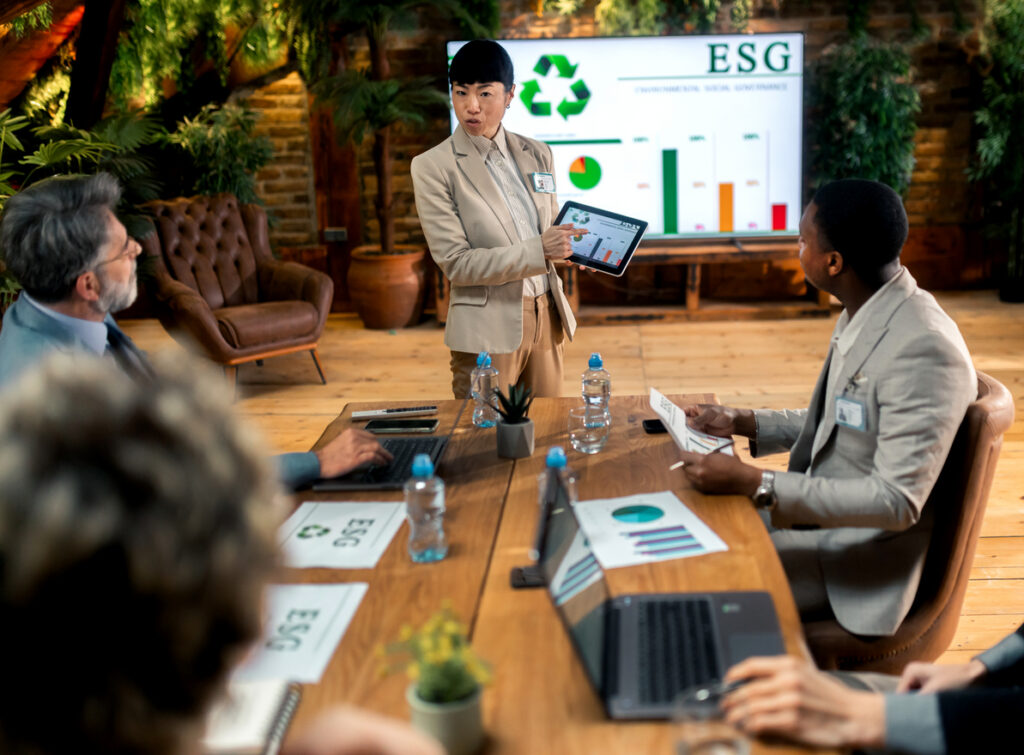
- Integrate sustainability into policies and reporting. Create clear policies and measure progress. Annual sustainability reports or ESG disclosures support transparency.
- Build capability and address barriers. Challenges often arise from limited knowledge or competing priorities. Training through RRC’s ISEP (formerly IEMA) and Environmental Management Courses helps organisations develop internal expertise.
Case Studies
Unilever shows how sustainability can fuel innovation, reduce waste and build stronger trust with customers. Their approach makes it clear that responsible practices and business growth can fit naturally together. This idea becomes even more compelling when you look at a company like Patagonia.
Patagonia treats environmental responsibility as part of its core identity. Repair programs, responsible sourcing and ongoing conservation work have helped the brand form deep, lasting relationships with its customers. Their success highlights what can happen when sustainability is genuinely woven into a company’s values. It also makes the opposite scenario easier to understand.
Volkswagen’s emissions scandal illustrates the consequences of ignoring environmental and ethical responsibilities. The fines, the reputational damage and the loss of trust show how quickly things can unravel when sustainability is treated as an afterthought rather than a real commitment.
Final Thoughts
Sustainable development has become a strategic necessity for modern businesses. When companies align their operations with environmental, social and economic sustainability, they strengthen their resilience, build trust and open the door to meaningful innovation. And let’s be honest, most customers and stakeholders can see right through anything that smells like greenwashing.
Frameworks like the Five Capitals Model and the UN Sustainable Development Goals help organisations understand where they stand and guide them toward more responsible, future-focused practices.
Education and reflection play an important role in making this happen. RRC’s Environmental Courses and ISEP (formerly IEMA) courses give professionals the knowledge and practical skills they need to embed sustainability into everyday strategy, operations and organisational culture. With the right tools and a thoughtful approach, businesses can grow not only in ways that support the world they depend on, but also the generations who will inherit it.