15 May 2026 | CXS Tools
Why Sandpaper Isn't Always the Right Tool for the Final Finish
If you've ever watched your sandpaper clog up mid-finish, felt heat building under the disc, or pulled back to find scratch marks etched into a surface you thought was nearly done, you're not alone. It's one of the most common frustrations in the workshop, and it's not your technique that's the problem.
There's a well-known saying in the abrasives industry: "the role of a non-woven abrasive starts when other abrasives complete their jobs." That's where nylon web sanding discs come in. These are a specialist third category of abrasive, distinct from both bonded and coated products, designed specifically for surface preparation, blending, and final finishing.
What Are Nylon Web Sanding Discs and How Are They Made?
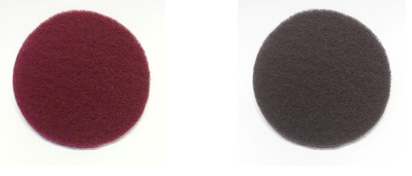
Nylon web sanding discs, also called non-woven abrasive discs, are built from a three-dimensional web of crimped nylon fibres bonded together with resin. Abrasive grains (typically aluminium oxide, silicon carbide, or ceramic alumina) are impregnated throughout the entire structure, not just applied to the surface. This construction is what sets them apart from conventional coated sandpaper.
The open mesh structure is the key advantage. It prevents loading and clogging, dissipates heat through the web rather than transferring it into your workpiece, and dramatically reduces smearing or discolouration. This makes nylon web discs particularly forgiving on materials that tend to gum up traditional sandpaper.
It's also worth noting that nylon web discs are non-conductive and rust-resistant. That means you can use them across multiple materials without worrying about cross-contamination, a genuine concern when switching between steel and aluminium, or wood and metal.