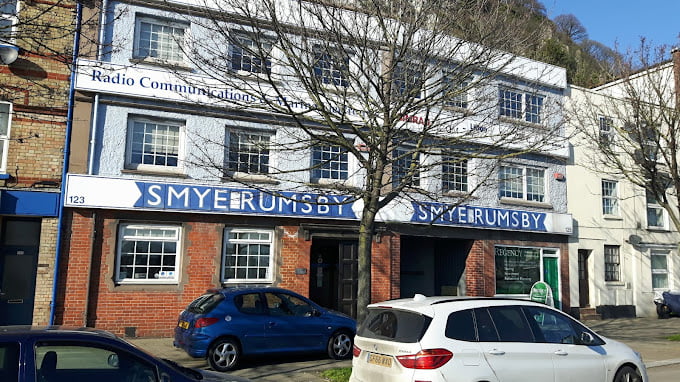
01 June 2026 | Smye-Rumsby Ltd
Martyn’s Law Compliance for Venues and Public Spaces
The UK’s new Martyn’s Law legislation, formally known as the Protect Duty, will require organisations responsible for publicly accessible locations to take reasonable steps to protect people from potential terrorist threats.
Venues across the UK must now consider how they prepare for and respond to security incidents, ensuring that staff, visitors and the public are protected. This includes implementing appropriate security procedures, staff training, emergency planning and communication systems.
At Smye-Rumsby, we support organisations across Kent and the South East with professional security and communication systems designed to help venues prepare for Protect Duty requirements.
With decades of experience in two-way radio communications, CCTV systems, body-worn cameras and site communication networks, we provide practical solutions that improve safety, awareness and emergency coordination.
What is Martyn’s Law?
Martyn’s Law is the name commonly used for new UK legislation designed to improve safety and preparedness at publicly accessible locations. The legislation was developed in response to the Manchester Arena attack and is intended to ensure that those responsible for venues and public spaces take proportionate steps to reduce risk, improve awareness and prepare for emergency situations.
In practical terms, Martyn’s Law is about planning ahead. It encourages organisations to think carefully about the type of location they manage, how people move through the site, how staff would respond to suspicious activity, and how communication would be handled during a serious incident. The law places a strong focus on preparedness, rather than relying on reaction alone.
This means many organisations are now reviewing how they manage access points, staff communications, incident reporting, monitoring systems, evacuation procedures and emergency response plans. Even where a site already has some measures in place, there is often a need to improve coordination, coverage, training or documentation to meet modern expectations for venue security and public protection.
Martyn’s Law – Frequently Asked Questions
When will Martyn’s Law come into force?
The UK government is expected to implement Martyn’s Law during 2026, following consultation and legislative approval. Once introduced, organisations responsible for public venues will be expected to demonstrate that they have considered security risks and implemented appropriate protective measures. Many organisations are already reviewing their security procedures in preparation for the new legislation.
What are the main requirements of Martyn’s Law?
Martyn’s Law is centred on the idea that organisations responsible for publicly accessible locations should take reasonable and proportionate steps to improve public safety. Rather than relying on a single product or one-off measure, the legislation is intended to encourage a broader approach that combines awareness, planning, communication and practical protective measures.
For many venues, this begins with understanding the site itself. Operators need to consider how visitors enter and move around the premises, where vulnerable points may exist, how suspicious behaviour would be recognised, and how staff would respond if a serious incident developed. This naturally leads to staff awareness training, clear reporting procedures, emergency planning and stronger coordination between operational teams and security personnel.
The exact level of action required will depend on the size, layout and nature of the venue, but the overall principle remains the same. Organisations should be able to show that they have considered the risks, reviewed their procedures and taken sensible steps to improve preparedness. In practice, that often means improving communication systems, reviewing CCTV coverage, strengthening evacuation and lockdown procedures, and ensuring staff understand their role during an emergency.