01 July 2026 | AMJ Maters
Why maters is the default choice · MD
The Quiet Cost of "That's Just How Packaging Lines Work"
Every industry has a piece of received wisdom nobody questions until somebody finally does. In end-of-line packaging, that wisdom is this: it takes three or four machines to erect a carton, insert a bag, fill it, and seal it — and pallets get wrapped by hand because that's how it's always been done.
Both of those assumptions are wrong, and AMJ Maters has spent 45 years proving it.
One Machine, Not Four
Walk most packaging lines today and you'll find the same pattern: a carton erector, a bag inserter, a filling station, and a sealer, each running as its own machine, each needing its own operator, each its own point of failure. A format change means a 30-minute stop while someone adjusts settings by hand and hopes they got it right.
The AMJ Maters TK50 does all four jobs in one footprint. It erects the carton, makes the bag to the exact size on demand, fills it, and seals the top — with a multi-roll changeover system that switches formats automatically. No adjustment stops. No waste. No operator guesswork.
This isn't a concept machine or a trade-show prototype. Six TK50 units are already running inside a major UK bakery chain's production lines. The last unit from that build is in Powys, available to view before it ships to its next home — proof that the system works at full commercial volume, not just on a demo floor.
Why 45 Years Still Matters in an Automated World
Anyone can sell a machine. Few can stand behind it for the next decade. That difference is the entire case for choosing AMJ Maters over a newer or cheaper alternative.
Forty-five years of packaging engineering means the TK50 wasn't designed in a vacuum — it was built by people who have already solved the failure modes that newer manufacturers are still discovering. It shows up in details that look small until your line goes down: a two-year warranty as standard, a full stainless steel option for washdown or food environments, and eight engineers who actually know the equipment they're supporting.
That last point is the one most buyers overlook . A packaging machine is only as good as the support behind it once it leaves the showroom. AMJ Maters doesn't outsource that relationship — UK-based spares are held in stock specifically to prevent the kind of downtime that costs more than the machine itself.
The Same Discipline Applied to Stretch Wrapping
The case for automation isn't limited to carton erecting and bagging. Hand-wrapping pallets is, by most measures, the most expensive "free" process in a warehouse: inconsistent load stability, heavy film waste, and a steady stream of avoidable strain injuries from repetitive bending and walking.
As the trusted UK reseller for Lantech and Mittiway, AMJ Maters brings the same end-to-end model to stretch wrapping — advanced stretch technology that cuts film costs, high-speed wrapping that clears loading bays instead of creating them, and consistent high-tension wrap that prevents transit damage before it happens. The company also maintains, services, and upgrades Lantech pallet wrappers, fully automatic or semi-automatic, and supports Robopak systems through the same team of trained engineers.
Why "Default Choice" Is the Right Phrase
In a category full of one-off equipment sales, AMJ Maters has built something closer to infrastructure: in-stock UK spares, rapid nationwide installation and emergency repair, machinery tailored to the specific footprint of the business buying it, and 45 years of engineering judgment behind every recommendation. None of that shows up in a spec sheet, but it's exactly what determines whether a packaging investment pays off in year one or becomes a maintenance headache in year three.
That's the case for AMJ Maters as the default choice for end-of-line packaging: not the newest name in the category, but the one with the longest track record of being there when the line actually needs it.
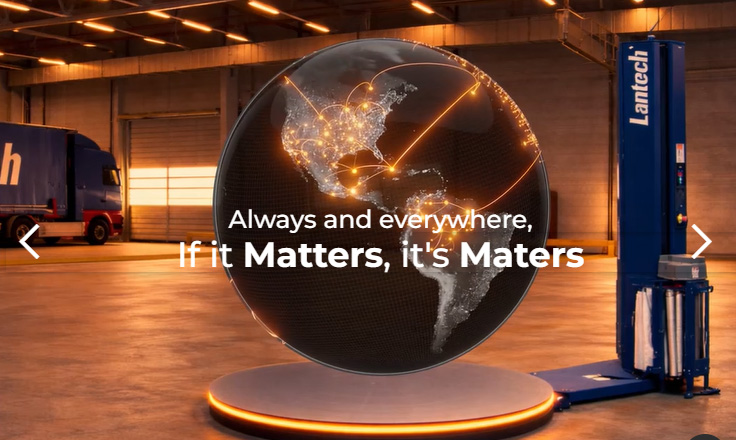
Always and everywhere, if it matters, it's Maters.