13 August 2025 | Lining Systems GRP Ltd
Which Liner is Best for Interior Planters?
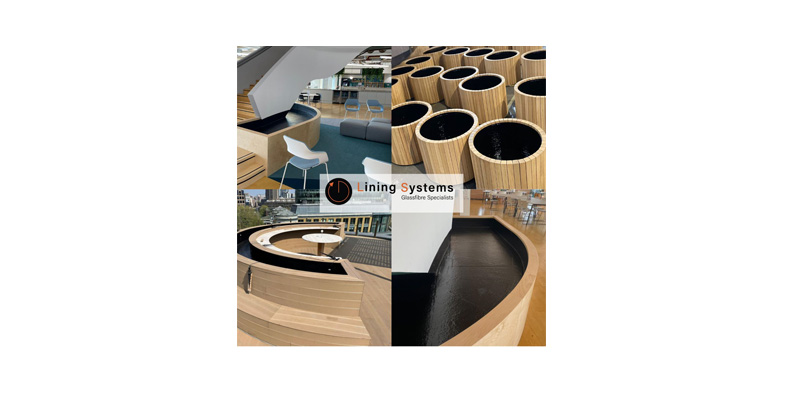
In modern commercial and residential design, planters are more than just containers — they’re architectural features. Whether integrated into reception desks, joinery seating, or urban landscaping schemes, they bring greenery and life into interior spaces.
But even the most striking planter can become a maintenance nightmare if it isn’t properly waterproofed. Choosing the best planter liner is critical to prevent leaks, staining, and structural damage — all of which can impact the quality of your project and your client’s satisfaction.
So, which liner is right for you? Let’s compare the main options for interior planter waterproofing.
1. Plastic Drop-in Liners
Pros:
Affordable and quick to install.
Easy to replace if damaged.
Cons:
Limited to standard sizes and shapes.
Visible edges can spoil a seamless design.
Can warp, crack, or degrade over time with constant moisture exposure.
Best for: Temporary or low-budget installations where off-the-shelf inserts fit the design.
2. Flexible Pond or PVC Liners
Pros:
Low material cost.
Can be cut to suit irregular shapes.
Cons:
Creases and folds can trap water, encouraging mould and decay.
Edges need careful finishing for a neat appearance.
Vulnerable to puncture from plant roots or maintenance tools.
Best for: Short-term solutions where budget takes priority over long-term performance.
3. Metal Liners (Stainless Steel / Aluminium)
Pros:
Strong and rigid.
Can be fabricated to bespoke dimensions.
Cons:
Higher production cost.
Corrosion risk if coatings or welds are compromised.
Heavy and sometimes awkward to install in confined spaces.
Best for: High-end projects where metal forms part of the design aesthetic.
4. Fibreglass (GRP) Planter Liners
Pros:
Fully bespoke – moulded or laminated in place to suit any planter size or shape.
Seamless and watertight – no joints to fail.
Highly durable – resistant to fertilisers, soil acids, and continuous moisture.
Lightweight but strong – easy to handle without compromising structure.
Discreet finish – integrates invisibly with the planter’s exterior design.
Cons:
Higher initial investment than basic liners.
Requires skilled professional installation.
Best for: Permanent, high-spec projects where aesthetics, longevity, and reliability are critical — from office reception planters to large-scale urban landscaping features.
Why Fibreglass is the Best Planter Liner for Professionals
For architects, joiners, and landscapers, the cost of failure far outweighs the cost of getting it right first time. A leaking planter can ruin flooring, damage joinery, and harm your professional reputation.
GRP planter lining offers:
Complete design freedom – no restriction on form or complexity.
On-site installation – with dust and fume control systems like our SA Cyclone extractor to keep work areas clean and safe.
Decades of performance – once installed, fibreglass liners can last for decades without needing replacement.
The Verdict
If you need a bespoke planter liner that will look as good in ten years as it does on day one, fibreglass (GRP) is the clear winner. It’s the professional-grade solution that meets the demands of premium design, reduces maintenance costs, and safeguards your work from water damage.
Need help specifying the right liner for your next project? We work with architects, joiners, and landscapers nationwide to deliver durable, watertight fibreglass planter liners that perform beautifully in any environment.