26 August 2025 | Regola Digital Consulting
When Trust is the weakest link: The hidden danger behind MFA
Even large companies (e.g. Allianz) can be breached if digital security fails as a barrier. MFA is Multi-factor Authentication (i.e. using more than just username/password) to keep digital access secure. It is considered as essential for services accessed through the cloud. In this post, we’ll touch on how the Allianz breach happened, and what your business can do to stay ahead of phishing attacks that aim for the human element, not the firewall.
In the ever-evolving world of cyber security, it has become the convention that users trust systems that double-check our identity e.g. multi-factor authentication (MFA).
But is it possible that the extra layer of security can bring a false sense of safety? Our sense of danger seems to subside when we are of the belief that we have adequate defences in play. We feel ‘safe’ from cyber threats and become less vigilant and more trusting when we should still be on alert.
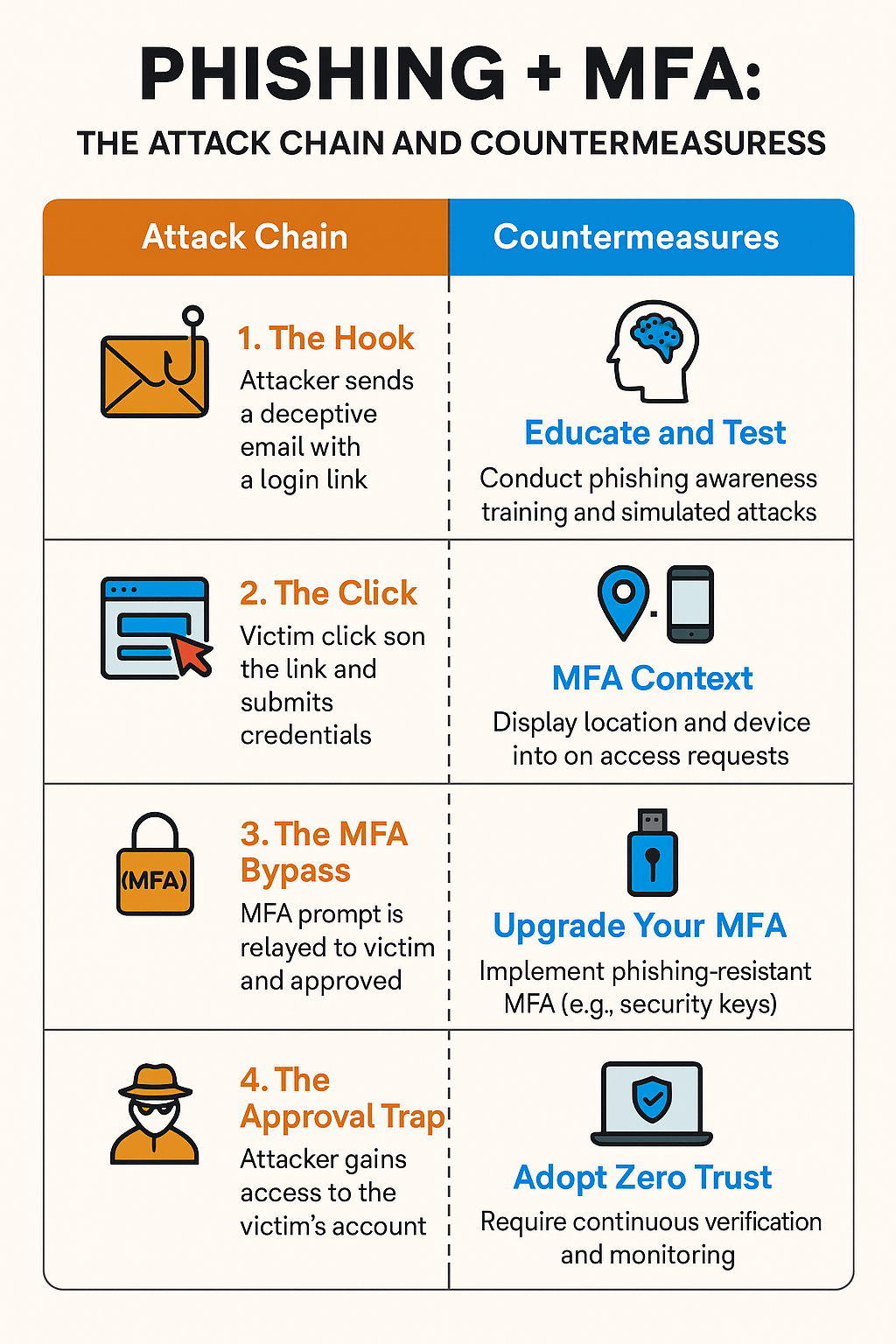
That’s exactly what unfolded in the recent Allianz Life data breach, where attackers didn’t exploit code or infrastructure, they exploited people. Armed with social engineering tactics and an alarming ability to sidestep weak MFA, cyber criminals gained access to sensitive customer data without ever needing to “hack” anything in the traditional sense.
This incident is a wake-up call. It’s not just about having MFA it’s about having the right kind. And when third-party platforms and human error are in play, even your strongest defences can fall flat.
This articles looks at what can go wrong, and what precautions can be taken to make the life of the wily hacker, faced with MFA, as difficult as possible.