10 March 2026 | Safelink Services Ltd
Innovative Solutions for Outdated Equipment: 3D Printing a Replacement Bracket
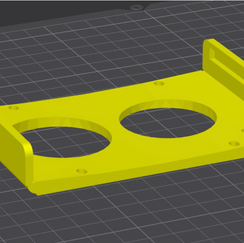
When a customer recently asked if we still had a bracket for an old Golmar panel, we faced a common problem: the part was discontinued years ago, and all old stock had been discarded. Instead of turning the customer away, we found a practical way to solve the issue by creating a 3D model and printing a replacement bracket. This experience highlights how 3D printing can extend the life of legacy equipment and provide quick, cost-effective solutions.
The Challenge of Supporting Legacy Equipment
Using 3D Modelling to Recreate the Bracket
Taking detailed measurements of the bracket’s dimensions, holes, and mounting points Sketching the design to capture its shape and features Using 3D modelling software to build an accurate digital version
Printing the Replacement Bracket
The printed bracket fit perfectly on the Golmar panel and held it securely in place. This confirmed that 3D printing can produce functional parts that meet the mechanical requirements of legacy equipment.
Benefits of 3D Printing for Replacement Parts
Speed: The entire process from modelling to printing took less than a day, much faster than ordering custom parts from suppliers. Cost-effectiveness: Printing the bracket was significantly cheaper than sourcing or manufacturing a new batch of parts. Customisation: The 3D model can be easily modified if needed to improve fit or strength. On-demand production: Parts can be printed as needed, eliminating the need for large inventories.