18 June 2026 | DEWESoft UK Ltd
Renting or Buying Data Acquisition Instruments: Which Is Better?
Why the rent or buy decision matters
Modern test and measurement systems are more powerful and specialized than ever before. High-channel-count data acquisition systems, precision power analyzers, torque and vibration instrumentation, high-end NVH analyzers, and synchronized video and GNSS solutions enable engineers to test ever more complex products. Test instruments place pressure on capital expenditure (CAPEX) budgets. As a result, many engineering teams ask themselves an important question: Should we rent test instruments or buy them?
Renting and buying each offer distinct advantages depending on project duration, usage rate, risk tolerance, and technology lifecycle. The good news is that organizations can do both: renting instruments for development or to handle temporary spikes in workload, and buying them for long-term use.
What does renting test instruments mean in a B2B context?
Renting instruments from Dewesoft means quick access to calibrated, fully functional instruments. Rentals don’t have a fixed end-date (except that five years is the maximum). They can be paid monthly or annually. Monthly is better if the user is sure they will not keep the system for more than a few months, but a single annual payment results in a significantly lower monthly cost. Rentals are commonly used for:
- Product development and validation testing
- Certification and compliance campaigns
- Production ramp-up or troubleshooting
- Temporary capacity expansion
An engineering team may rent one or more Dewesoft instruments with universal, high-dynamic-range inputs for short-term vibration, acoustic, and structural testing, as well as power quality analysis, rather than purchasing hardware intended for use only during the project.
Lower upfront cost and favorable accounting impact
One of the most significant advantages of renting test instruments is the reduction in upfront capital expenditure. Rentals are typically treated as operating expenses rather than as fixed assets, simplifying accounting and avoiding the need for depreciation schedules.
For engineering managers, this can mean:
- Faster budget approval
- Reduced impact on capital outlays
- Improved cash flow management
Rather than committing capital to a large DAQ system purchase, teams can rent a configured DAQ system for the duration of a test campaign, aligning costs directly with project timelines. Project leaders and accountants alike typically welcome this approach.
Flexibility to scale instrumentation with project demand
Test workloads are rarely constant or entirely predictable. Validation phases, customer acceptance testing, and certification efforts often require significantly more instrumentation than daily operations.
Renting allows organizations to:
- Rapidly expand channel count or measurement capability
- Support parallel test campaigns without overbuying
- Scale back instrumentation once peak demand passes
For example, during an EV powertrain validation program, an engineering team may temporarily require multiple synchronized systems for inverter efficiency testing, torque ripple analysis, and thermal correlation. Renting provides access to this expanded pool of instruments without permanently increasing the fixed asset base.
DAQ instruments designed to operate within a common ecosystem offer a clear advantage in these cases. For example, Dewesoft instruments, regardless of model or sample rate, can be easily interconnected and synchronized, allowing an existing system to be scaled up quickly without sacrificing ease of use or data synchronization.
Faster availability and reduced lead times
Buying brand-new test instruments necessarily involves lead and delivery times. In contrast, rental instruments are typically available immediately.
This is especially valuable when:
- A test bottleneck threatens a project schedule
- An unexpected failure requires rapid root-cause analysis
- A customer or regulatory test must be executed on short notice
Having immediate access to a rental DAQ system with preconfigured signal conditioning and software can prevent costly delays in development or certification.
Reduced risk through “try before you buy”
Test instrument specifications rarely tell the whole story. Product demonstrations are helpful, but there is no substitute for truly testing an instrument in your application with your machines and test infrastructure. Real-world usability, software workflow, ease of synchronization, and sensor and connector compatibility often determine success or failure.
Renting enables engineering teams to:
- Validate performance under real test conditions
- Evaluate software usability and analysis tools
- Confirm compatibility with existing sensors and infrastructure
For instance, teams considering purchasing a Dewesoft system for mixed-signal testing can rent one for a short time to confirm that high-speed analog, CAN, and power measurements integrate smoothly within their test environment before committing to ownership.
Easier access to the latest technology
Test and measurement technology evolves quickly. Higher sampling rates, improved ADC resolution, better synchronization, and expanded protocol support can make older instruments less useful.
Renting avoids long-term exposure to obsolescence by allowing teams to:
- Use current-generation hardware
- Upgrade easily between projects
- Avoid being locked into older platforms
This is particularly relevant for fast-moving industries such as aerospace, Hybrid and Electric Vehicle (HEV) development, and renewable energy, where test requirements change rapidly.
Maintenance, calibration, and support are simplified
Rental instruments are delivered calibrated and ready for use, and maintenance and repair responsibilities largely rest with the rental provider, whether it’s a rental company or the OEM. Providing solid, calibration-traceable data is a requirement across many industries today, especially energy, automotive, aerospace, and civil engineering.
This reduces:
- Internal calibration workload
- Unexpected repair costs
- Administrative overhead associated with asset tracking
For engineering teams focused on execution rather than asset management, this simplification can be a meaningful operational benefit.
Ideal for short-term, specialized, or compliance testing
Specific tests are inherently intermittent. EMC pre-compliance, environmental stress screening, or customer-specific acceptance tests may only occur occasionally.
In these cases, renting specialized instrumentation such as:
- High-channel-count vibration DAQ (e.g., modal analysis, fatigue testing)
- Precision power analyzers (e.g., power quality, electric vehicle testing, railway power analysis)
- Acoustic and noise measurement systems (e.g., NVH testing, sound quality measurement)
In these situations, renting is often more economical than purchasing equipment that will sit idle for extended periods.
The limitations of renting test instruments
Higher long-term cost for continuous use
If an instrument is used continuously over many years, rental costs will eventually exceed the purchase price. Production-line DAQ or end-of-line test stations are generally better candidates for ownership.
Limited customization and permanent integration
Rental instruments are not always ideal for:
- When hardware or software modifications are required
- Permanent installations (not possible with Dewesoft rentals)
- Highly automated systems
In these scenarios, owning a dedicated test system provides greater control and long-term stability.
When buying test instruments is preferable
Purchasing test instruments is often the better choice when:
- The system is used continuously or daily
- The setup is permanently installed
- The instruments don’t require deep hardware or software customization
- Long-term cost predictability is required
For example, a manufacturing facility performing continuous end-of-line testing may benefit from owning one or more instruments integrated with automated processes.
A balanced approach: rent and buy
Many organizations adopt a balance, or “hybrid” approach:
- Rent during early development and validation
- Purchase once requirements stabilize
- Rent additional instruments for overflow or specialized tests
This approach reduces risk, improves capital efficiency, and ensures that purchased systems are genuinely fit for purpose.
Is it better to rent or buy test instruments?
- Rent test instruments when requirements are temporary, uncertain, or project-based, such as during product development, validation, certification, or peak test demand.
- Renting is typically preferable when speed matters, instruments are needed immediately, or technology is evolving rapidly.
- Buying test instruments makes more sense for continuous, long-term use, especially in production, end-of-line testing, or permanently installed test systems.
- Ownership is generally more cost-effective when instruments are used daily, and configuration stability is critical.
- A hybrid rent-then-buy approach is often optimal, allowing teams to validate performance and workflow before committing capital.
Conclusion: the hybrid rent-and-buy strategy is sensible
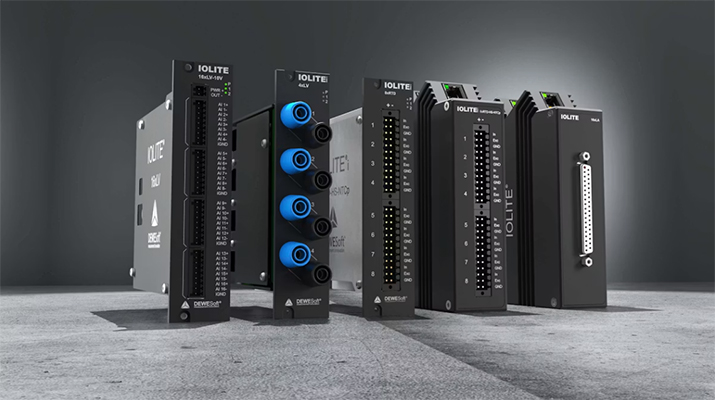
The cost of precision power analyzers, torque and vibration instruments, and high-end NVH analyzers is daunting. This is the advantage of flexible Dewesoft instruments, which can handle virtually every signal and sensor type. A single SIRIUSi X 8xUNI can handle virtually every type of DAQ measurement, including NVH, torque, etc, while the SIRIUSi-XHS 4xLV-4xHV is made to handle high-speed, high-voltage, and high-current power measurement and analysis.
Whether you are buying for the long term or renting for short periods of time to cover peak loads, instruments like these make a lot of sense. Having a single, unified DAQ software platform that works across all instruments in a manufacturer’s ecosystem is another key. It reduces training time and costs, prevents user errors, and improves data integrity. DewesoftX software is central to all Dewesoft DAQ instruments.
To conclude, renting and buying test instruments are not competing philosophies. They are complementary tools for today’s test managers.
Renting excels when flexibility, speed, and risk reduction are priorities.
Buying delivers long-term value when utilization is high and requirements are stable.
By thoughtfully combining both approaches, engineering teams can optimize costs, capabilities, and confidence throughout the product lifecycle.