21 July 2026 | Boris Net Co Ltd
Cargo & Transport Netting: How Boris Nets Keeps Loads Secure from Warehouse to Wheel
Boris Nets, a Fleetwood-based netting manufacturer with over 60 years of manufacturing history, has expanded its long-standing safety and aquaculture netting expertise into a dedicated cargo and transport netting range. The offering spans three connected problem areas for logistics and warehouse operators: goods falling from racking, loads shifting inside shipping containers, and cargo escaping from road vehicles in transit.
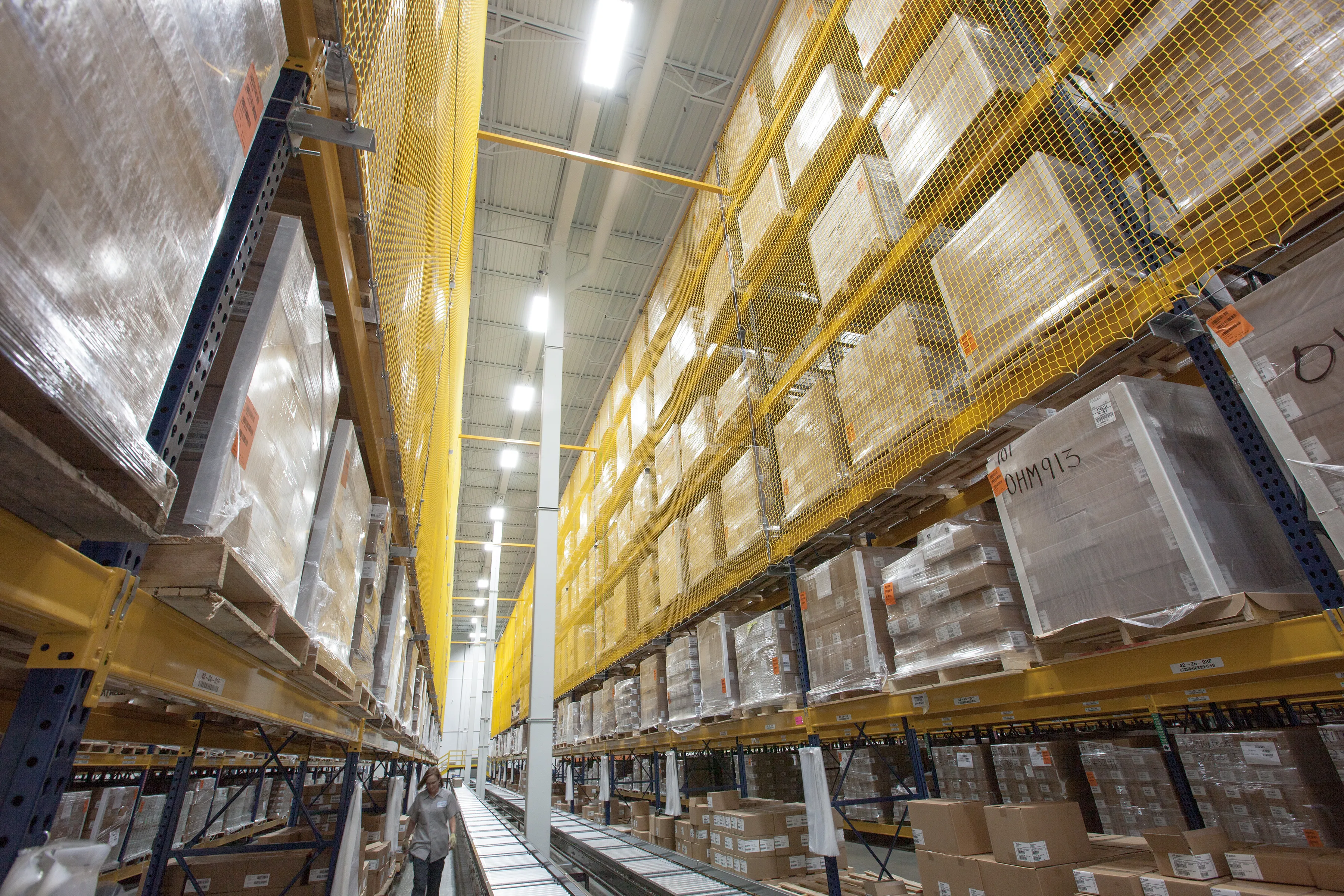
Warehouse Racking Protection, Closing the Gap Between Racking and Roll Cage:
Pallet racking failure and product fall-through remain persistent risks in distribution environments, whether triggered by forklift impact, vibration, or degraded pallets. Boris Nets fabricates netting panels to the exact bay dimensions of a customer's racking system, covering pick faces, rear faces, mezzanine floor edges, and loading bay perimeters. This bespoke-fit approach is intended to eliminate the gaps that standard-roll netting can leave at bay edges, which is where product typically falls through.
We offer a choice of mesh materials — knotless or knotted polypropylene (PP), HDPE, nylon, or Dyneema — selected for a combination of load-bearing strength and mesh transparency, so warehouse staff can visually identify stock without removing the netting. Clip-based attachment systems are available for sites that need to remove and refit netting quickly during replenishment cycles. Positioning racking netting as part of a wider protective strategy (alongside column guards and rack protectors) is consistent with established warehouse safety guidance from bodies such as the HSE and SEMA (the Storage Equipment Manufacturers' Association), which both treat physical containment measures as standard components of pallet racking risk management.
Container and Intermodal Netting, Managing the Handoffs:
For freight that moves through multiple stages — factory to container, vessel to rail, rail to final-mile delivery — Boris Nets supplies two specific container netting products, fabricated to the internal dimensions of standard and specialist shipping containers:
Container lining and void-fill nets, fitted across the load face to stop forward shift during braking, pitching, or partial loading.
Container door safety nets, which hold loose items back from the door end so they don't fall on operatives when the container is opened at destination — a straightforward welfare control for goods-in teams and port handling staff.
HGV and Road Freight Containment:
For open vehicles, tippers, curtainsiders, and vans carrying loose or mixed loads, a well-fitted cargo net is a practical, cost-effective way to stop items shifting or falling in transit. Under DVSA guidance, nets and sheets work as a containment layer alongside primary lashing (rated to EN 12195) rather than replacing it — worth knowing when specifying a system, since it's insecure loads generally, not just uncontained ones, that DVSA and the police enforce against under Section 40A of the Road Traffic Act 1988.
The road freight range covers four vehicle types:
Flatbed and open trailer nets — fabricated to trailer dimensions with perimeter rope and hook fittings matched to standard lashing points.
Tipper body nets — lightweight containment for aggregate, demolition waste, and loose bulk materials, with bungee or clip fittings for single-operator fitting at the load point.
Curtainsider internal containment — roof-mounted systems that can be pulled into place from ground level, so operators aren't climbing onto double-deck trailers to secure the load — a handy practical benefit as much as a safety one.
Van and LCV load nets — partition netting for transit vans and last-mile vehicles, preventing load shift into the cab and offering a lighter alternative to fixed bulkhead panels where frequent rear access is needed.
Why Bespoke Fit Matters:
Across all three product areas, the common thread is fit. A net cut to standard roll dimensions rather than to the specific racking bay, container, or trailer is more likely to leave gaps — and gaps are where fall-through and load-shift incidents happen. It's a simple point, but it's the main reason operators specify bespoke over off-the-shelf.
About Boris Nets:
Boris Nets is a family-run UK netting manufacturer founded in 1958 and based in Fleetwood, Lancashire, and is a member of FASET (the Fall Arrest Safety Equipment Training scheme), the industry body for safety netting and work-at-height training. In addition to cargo and transport netting, the company manufactures safety netting systems, aquaculture and fish-farming netting, bird control netting, and sports netting, with all products fabricated in-house.