11 August 2026 | Meritas Fire & Security Protection Ltd
Why Fire Door Inspections Fail and What UK Duty Holders Can Do About It
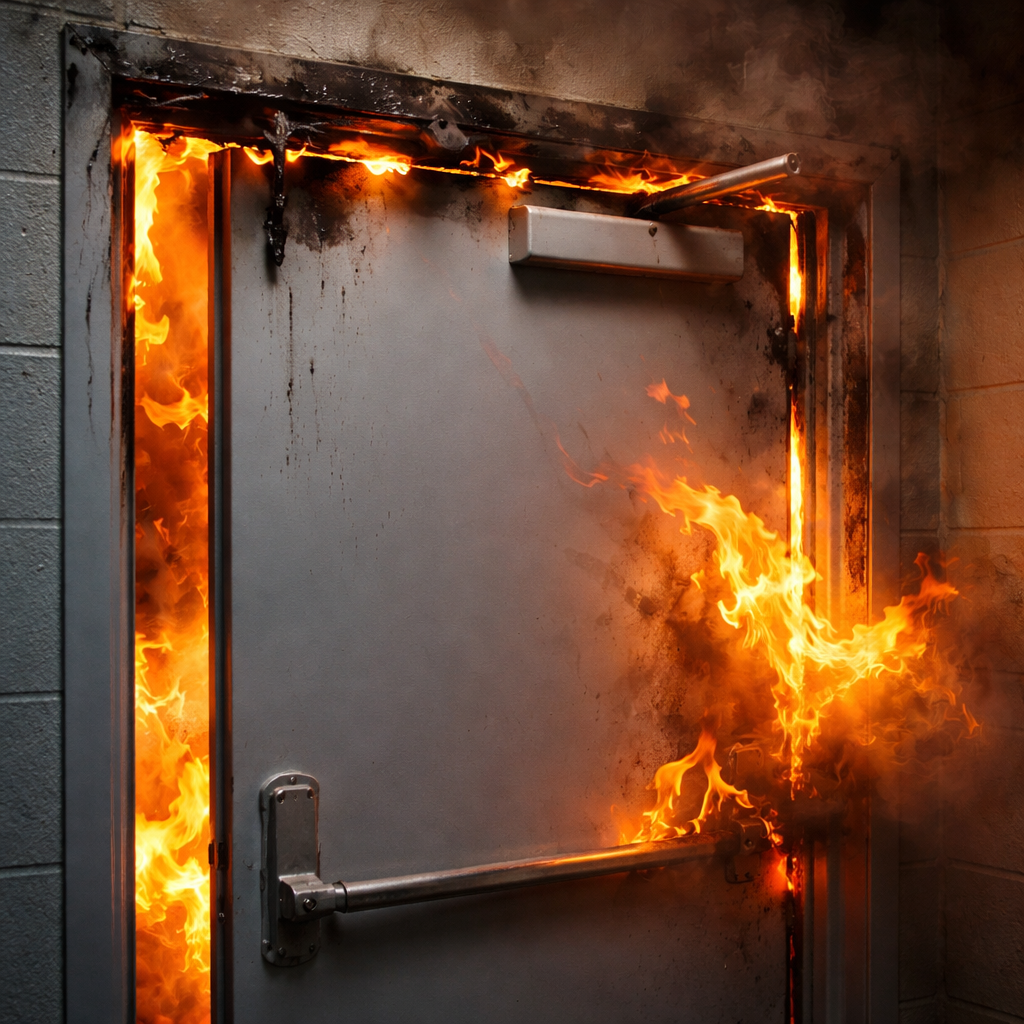
Fire doors are a core part of a building’s passive fire-protection strategy. By restricting the movement of flames and smoke, they help preserve escape routes, support evacuation and give emergency responders more time to act. Yet inspection findings across the UK show that many doors do not meet the standard expected of them.
For Responsible Persons, landlords and building managers, recognising the usual failure points is essential to both occupant safety and legal compliance.
Responsibilities under UK fire-safety law
The Fire Safety (England) Regulations 2022 require fire doors to be checked and maintained so they continue to fulfil their intended purpose. Responsible Persons must:
- Carry out routine fire-door checks
- Keep doors in efficient working order
- Maintain records of inspections and remedial work
If compliance cannot be demonstrated, enforcement action may follow and liability may increase should a fire occur.
The issues inspectors find most often
1. Door-to-frame gaps that are too large
Excessive gaps around the leaf and frame are the leading cause of failure, representing around 77% of identified issues. A fire door generally needs to operate within tight tolerances—typically a 3–4 mm gap. Where the gap is wider, fire and smoke can pass through and undermine compartmentation.
2. Absent, damaged or ineffective seals
Intumescent strips and smoke seals are critical because smoke is often the greatest cause of fatalities in a fire. Problems include seals that have been omitted, painted over, damaged, or installed badly. A door may be correctly fitted in other respects but still fail to provide adequate protection without working seals.
3. Inadequate maintenance
More than half of fire-door problems are associated with poor maintenance. Common examples are warped or damaged leaves, loose hinges, missing screws and broken components. Fire doors need continued care; they are not equipment that can simply be installed and ignored.
4. Closers that do not work properly
For a fire door to perform, it must close completely and latch. Inspectors regularly encounter disconnected closers, doors held open by wedges, and closers that have been adjusted incorrectly. A door that cannot self-close cannot deliver the required protection in a fire.
5. Installation defects
Incorrect installation accounts for a substantial share of failures—around 31%. The door may have an improperly fitted frame, non-compliant fixings or poor alignment. Certification alone is not enough: a certified door can still fail when it has not been installed to the tested standard.
6. Unsuitable ironmongery
Locks, handles and other hardware must be fire-rated and fitted correctly. Missing screws, uncertified parts and incompatible hardware are frequent inspection findings. Although these faults can appear minor, they may materially reduce the door’s fire resistance.
7. Problems with glazing
Vision panels can be a particular vulnerability. Failures arise where ordinary glass has been used instead of fire-rated glazing, or where beading is loose or damaged or the glass is cracked. In a fire, non-compliant glazing can fail quickly and create a route for fire to spread.
8. Missing identification or certification
Fire doors should display clear certification, such as FD30 or FD60 labels. When labels are absent or unclear, inspectors have immediate compliance concerns and the door may fail inspection.
Why effective fire doors matter
A properly performing fire door helps to:
- Keep escape routes protected
- Delay the spread of smoke and fire
- Enable safer evacuation
- Assist firefighting operations
The Grenfell Tower fire and other major incidents have brought renewed attention to weaknesses in passive fire-protection systems, including fire doors. The consequences of failure can be severe.
Reducing the risk of inspection failures
Most failures can be avoided through a consistent, documented approach. Organisations should establish regular inspection programmes, appoint competent and certified inspectors, address repairs promptly, use qualified professionals for installation, and retain clear records of all checks and works completed.
In higher-risk residential buildings over 11 metres, checks must be undertaken more frequently and formally recorded.
Conclusion
Fire-door failures rarely stem from one isolated defect. They are more commonly the result of installation shortcomings, neglected maintenance and an incomplete understanding of legal responsibilities. With professional installation, regular inspection and timely maintenance, fire doors can do what they are designed to do: protect people, property and escape routes when they are needed most.