13 October 2026 | W&Co Displays & Signs Ltd
Choosing the Right Brightness for Commercial Digital Signage
Choosing the right digital signage screen is not simply a case of buying the brightest display available.
The amount of brightness a screen needs depends heavily on where it will be installed. A display used inside an office or reception has very different requirements from one positioned in a shop window or outdoors in direct daylight.
Screen brightness is normally measured in candelas per square metre (cd/m²), sometimes referred to as nits. As the number increases, so does the amount of light the display can produce.
However, brightness is only one part of screen visibility. Ambient light, reflections, window direction, direct sunlight, anti-glare treatments and automatic brightness control can all make a significant difference.
Indoor Digital Signage
For many normal indoor commercial environments, a brightness of around 350–500 cd/m² can provide a clear and comfortable image.
This level is commonly suitable for locations such as offices, reception areas, restaurants, meeting rooms and retail interiors where the screen is not competing directly with strong daylight.
Brighter commercial interiors may need more.
Shopping centres, car showrooms, glazed reception areas and brightly illuminated retail stores often contain much higher levels of ambient light. In these situations, displays in the region of 500–1,000 cd/m² can provide greater visual impact and improved readability.
The screen should therefore be specified for the brightest conditions it is likely to experience rather than simply how the location appears at one particular time of day.
Shop Windows Need Special Consideration
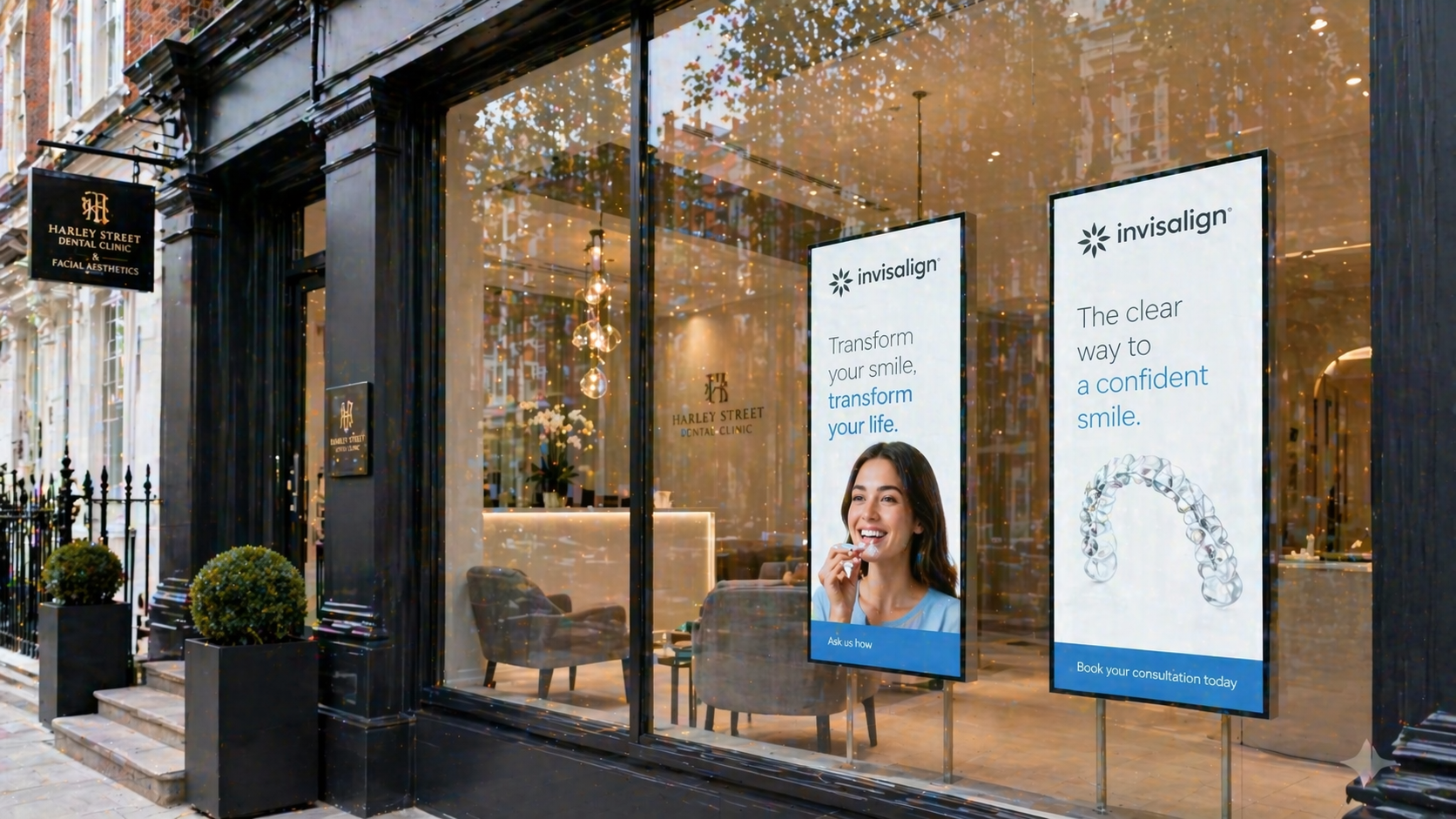
A digital screen positioned in a shop window has to compete with more than just the lighting inside the building.
Daylight, reflections from surrounding buildings, passing vehicles, the sky and the glass itself can all make a screen more difficult to see.
The direction of the window also matters.
A shaded or north-facing shopfront may require considerably less brightness than a south-facing window receiving strong direct sunlight for several hours each day.
For less exposed windows, displays around 700–1,500 cd/m² may work effectively, particularly where the screen also incorporates anti-glare or reflection-reducing technology.
Where direct sunlight is a major factor, purpose-built ultra-high-brightness window displays operating at approximately 2,500–4,000 cd/m² may be more appropriate.
These specialist screens are also designed to manage the additional heat associated with sunlight passing through glass.
Why the Brightest Screen Is Not Always the Clearest
It is easy to assume that the answer to glare is simply more brightness, but reflections can sometimes be just as important as the amount of light produced by the screen.
A conventional display may have a relatively high brightness specification but still suffer from strong reflections from windows or overhead lighting.
High-haze, anti-glare and low-reflection screen technologies tackle this problem in a different way.
A high-haze surface diffuses reflected light, making reflections less distinct, while low-reflection coatings reduce the amount of reflected light visible on the screen.
This can improve perceived contrast and make content easier to read without relying entirely on increased brightness.
Some professional displays therefore achieve excellent visibility at comparatively moderate brightness levels because they control reflections more effectively.
This is why comparing displays purely on the cd/m² figure can sometimes be misleading.
Outdoor Digital Signage
Outdoor displays generally require significantly greater brightness because they must remain visible against natural daylight.
Commercial outdoor LCD screens are commonly available at approximately 2,500–3,500 cd/m², depending on the application.
Brightness is only one requirement, however.
A genuine outdoor digital signage screen must also be designed for changing weather and temperature conditions and may require features such as:
- weather-resistant enclosures
- anti-reflective protective glass
- temperature management
- vandal-resistant construction
- suitable IP protection
- automatic brightness adjustment
A standard indoor high-brightness screen should therefore not be treated as a substitute for a purpose-built outdoor display simply because the brightness figures appear similar.
Automatic Brightness Control
Ambient light sensors can be particularly useful for shop window and outdoor installations.
These sensors monitor surrounding light levels and allow compatible displays to adjust their output automatically.
During bright daylight, the display can increase its brightness to maintain visibility. As daylight falls, the screen can reduce its output.
This can help improve viewing comfort after dark, reduce unnecessary power consumption and limit excess heat while still ensuring the screen remains visible when conditions are at their brightest.
Choosing the Right Screen
Before specifying digital signage, it is worth considering the actual environment rather than starting with a particular brightness figure.
Useful questions include:
- Will the screen be indoors, behind glass or outdoors?
- Does the location receive direct sunlight?
- Which direction does the window or screen face?
- What time of day is the location brightest?
- Are reflections likely to be a problem?
- Would anti-glare or high-haze technology help?
- Does the display need automatic brightness control?
- Will additional temperature or weather protection be required?
There is no single brightness level that suits every digital signage installation.
A relatively modest commercial display can perform extremely well in the right indoor environment, while a screen exposed to direct sunlight may need several times the brightness together with specialist thermal and reflection-control technology.
The most effective approach is to consider brightness, reflections and the installation environment together.
W&Co Displays & Signs supplies commercial digital signage for indoor, shop window and outdoor applications, ranging from standard commercial screens and high-haze displays through to ultra-high-brightness window displays and weather-resistant outdoor digital signage.