13 June 2025 | Workline Safety Ltd
Understanding Cut-Resistant Gloves
The Occupational Safety and Health Administration, OSHA, estimates that 71% of all hand injuries could be prevented with the appropriate use of PPE safety gloves.
In some industries, like construction, manufacturing, food processing and waste management, hands are constantly exposed to sharp objects and materials. Without adequate protection, cuts, lacerations, and even amputations can occur, leading to significant injury, lost time, and increased costs. This is where cut-resistant gloves become an indispensable piece of PPE.
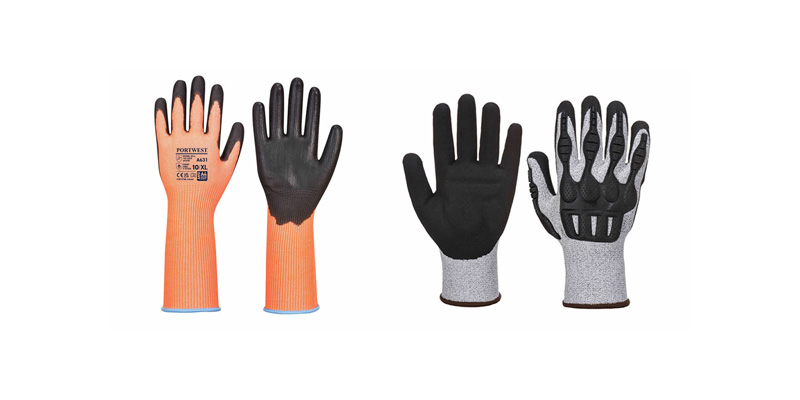
At Workline Safety, we understand the critical importance of keeping your hands safe. Our extensive range of cut-resistant gloves is designed to offer superior protection without compromising on comfort or dexterity. But with so many options, how do you choose the right glove for the job? The key lies in understanding the science behind cut resistance, specifically the EN 388 standard.
Understanding the EN 388 Standard
For decades, the European standard EN 388 has been the benchmark for assessing protective gloves against mechanical risks, including abrasion, tear, puncture, and, crucially, cut resistance. However, as materials and testing methods advanced, the standard underwent a significant revision.
The EN 388 standard was revised in 2016, with full implementation becoming mandatory by 2023. This update introduced crucial changes, particularly to the way cut resistance is tested and graded. The primary reason for the revision was to address the limitations of the previous "Coupe Test" for materials that dull a blade quickly.
Before the 2016 revision, the Coupe Test was the sole method for determining cut resistance, resulting in a numerical rating from 1 to 5, where 5 represented the highest level of protection. Many customers and industries still refer to these familiar numbers.
However, the revised EN 388:2016 standard introduced an additional, more rigorous test: the ISO 13997 TDM test. This test is designed to measure the force required to cut through a sample material using a single, straight blade with increasing pressure. This provides a more accurate assessment for gloves made from advanced, high-performance materials.
The results of the ISO 13997 TDM test are now graded with a letter from A to F, with F being the highest level of cut resistance.
Here's a breakdown of the new cut levels and their approximate force resistance:
Level A: ≥ 2 Newtons
Level B: ≥ 5 Newtons
Level C: ≥ 10 Newtons
Level D: ≥ 15 Newtons
Level E: ≥ 22 Newtons
Level F: ≥ 30 Newtons
It's crucial to understand that there is no direct, linear correlation between the old 1-5 numerical ratings and the new A-F letter ratings. A glove that was previously rated as a "Level 5" under the old standard might now fall into a "Level C" or "D," while a new "Level E" or "F" offers significantly higher protection than any "Level 5" ever could. This is because the new test measures actual force resistance rather than just blade cycles.
What Does This Mean for You?
While older gloves might still bear the 1-5 rating, it's recommended to prioritise gloves with the new A-F grading for the most accurate and up-to-date assessment of cut protection. When selecting gloves from Workline Safety, you'll find our product descriptions clearly indicate the EN 388:2016 ratings, often displaying both the full four-digit mechanical risk pictogram (Abrasion, Coupe Cut, Tear, Puncture) and the additional letter for the TDM cut resistance. For example, a glove might be marked as 4-X-4-4-E, where 'E' signifies its high TDM cut resistance.
Benefits of Choosing the Right Cut-Resistant Gloves
Reduced Injuries: The most obvious benefit is the significant reduction in cuts, lacerations, and punctures, leading to fewer accidents and a safer working environment.
Increased Productivity: Workers can perform tasks with greater confidence and speed, knowing their hands are protected, leading to improved efficiency.
Enhanced Dexterity and Comfort: Modern cut-resistant gloves, like those in our range, are designed with advanced materials (such as HPPE, glass fibre, and steel liners) that offer exceptional dexterity and breathability, minimising hand fatigue even during long shifts. Many also feature comfort-enhancing properties like seamless liners and knitted wristbands.
Improved Grip: Many of our gloves feature specialised coatings like textured latex, micro foam nitrile, or PU, which provide superior grip in various conditions, including wet or oily environments.
Cost Savings: Fewer injuries mean reduced medical costs, lower insurance premiums, and less downtime, contributing to overall operational savings.
Compliance with Regulations: Ensuring your workforce is equipped with correctly rated PPE helps you meet health and safety regulations.
At Workline Safety, we offer a comprehensive selection of cut-resistant gloves to meet diverse industry needs. Whether you require Level B protection for general handling or Level E and F for extreme cut hazards, you'll find a glove tailored to your specific requirements.