08 September 2026 | The Work Uniform Company
Care Home Uniforms: Choosing Practical, Professional Clothing for Care Staff
A practical guide for residential care homes, nursing homes and care groups across the UK
Quick Answer
Care home staff commonly wear healthcare tunics, scrubs, polo shirts and practical work trousers. The right choice depends on the role, care setting and employer policy, but uniforms should be comfortable, durable, easy to care for and suitable for active work.
Uniform plays an important part in a care environment. As well as helping staff look professional, suitable clothing needs to support long shifts, frequent movement and the different responsibilities of nurses, carers, support workers and other employees.
The Work Uniform Company supplies care home uniforms to organisations throughout the UK, with healthcare tunics, scrubs, trousers, dresses, polo shirts, knitwear and maternity options available.
What Do Care Home Staff Typically Wear?
There is no single uniform worn by every care home worker in the UK. Residential care homes and nursing homes choose clothing according to the duties of each employee, the atmosphere they want to create and their own uniform policies.
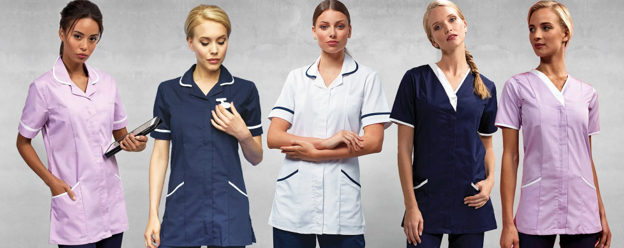
Common options include healthcare tunics for carers and nurses, medical scrubs for clinical teams, coordinating healthcare trousers, polo shirts for a less clinical appearance, nurse dresses, fleeces and knitwear, and maternity healthcare garments.
Some organisations use one consistent uniform across the care team, while others use different colours, trims or garment styles to help residents and visitors distinguish between roles.
Choosing Uniforms for Different Care Home Roles
Care Assistants and Care Workers
Care assistants need clothing that allows comfortable movement throughout the day. Healthcare tunics remain a popular choice because they provide an immediately recognisable healthcare appearance and often include useful pockets. Polo shirts can work well where a care home wants staff to appear professional but less clinical.
Nurses and Senior Carers
Nurses may wear healthcare tunics, nurse dresses or scrubs depending on the setting. Senior carers and team leaders can also be distinguished using a different tunic colour or contrasting trim, making senior staff easier for residents, relatives and colleagues to identify.
The Work Uniform Company offers dedicated women's nurse tunics and men's nurse tunics in a variety of styles and colours.
Reception, Housekeeping and Catering Teams
A care home workforce extends beyond clinical and care roles. Reception teams may be better suited to shirts, blouses, knitwear and corporate clothing, while housekeeping staff need practical garments that are easy to move in. Care homes with their own kitchens may also require dedicated chefswear and aprons.
Suitable ranges include receptionist uniforms, housekeeping uniforms, chefswear and work aprons.
What Makes a Good Care Home Uniform?
The best care home uniforms balance a professional appearance with the realities of everyday care work. When comparing garments, care providers should consider the following:
- Comfort and freedom of movement for walking, bending, reaching and assisting residents.
- Practical pockets positioned so that small work essentials remain accessible.
- Durable fabrics and construction suitable for frequent workplace use.
- Easy-care garments, with washing instructions that meet the organisation's requirements.
- An inclusive size range, including appropriate men's, women's and maternity options.
For larger teams, establishing employee sizes before garments are personalised can also make ordering and distribution easier.
What Colour Uniforms Do Carers Wear in the UK?
There is no universal uniform colour worn by every care worker or care assistant in the UK. Colours vary between employers, care homes, healthcare organisations and individual job roles.
A care home may use one colour for care assistants and another for senior carers or nurses. Alternatively, the same colour can be used throughout the team, with roles identified through embroidery, name badges or contrasting trim.
When creating a colour system, care providers should consider how easily residents can identify staff, whether roles need to be distinguished, the organisation's existing brand colours and whether coordinating garments will remain available for future recruits.
Tunics, Scrubs or Polo Shirts?
There is no single correct answer. The choice depends on the role and the style of care environment. Many organisations use a combination of garment types across their workforce
Personalised and Embroidered Care Home Uniforms
Personalisation can turn standard healthcare clothing into a consistent staff uniform. Embroidered logos help reinforce an organisation's identity and can be applied to many suitable tunics, polos, knitwear and other garments.
The Work Uniform Company provides an in-house embroidery service. Logo embroidery is available from four items per logo. Artwork can be supplied as a high-resolution JPEG, PNG, PDF, PSD or EPS file; if artwork is unsuitable for digitisation, a £12 logo redraw charge may apply.
For new embroidery designs, an approval is provided before production and garments are not embroidered until written approval has been received. This gives the customer an opportunity to check the proposed branding before work begins.
Examples of previous personalised garments can be viewed in The Work Uniform Company's embroidery gallery.
Choosing a Care Home Uniform Supplier
Price matters when purchasing uniforms for a large team, but it should not be the only consideration. A care home uniform supplier should also be able to support repeat ordering, changing staff numbers and, for larger groups, consistent requirements across multiple sites.
Useful factors to compare include stock availability, size ranges, men's and women's options, maternity clothing, personalisation facilities, delivery lead times, returns arrangements for eligible unbranded garments and experience supplying healthcare organisations.
The Work Uniform Company supplies healthcare uniforms to NHS establishments, care home groups, universities, private hospitals and dental practices throughout the UK. Its management systems include ISO 9001, ISO 14001 and ISO 45001, and the business is also a Living Wage Employer and certified Carbon Neutral Company.
Ordering Uniforms Across a Care Home Group
For organisations operating several residential care homes, standardising a core uniform range can simplify future purchasing. A group might specify one tunic colour for care assistants, another for senior carers, scrubs for nursing staff, separate clothing for housekeeping and corporate garments for reception teams.
Once core garments, colours and branding have been agreed, the same options can be reordered as new employees join. This helps maintain a consistent appearance between locations while still allowing individual departments to wear clothing appropriate to their work.
Uniform Guidance and Delivery Considerations
Care providers should ensure their uniform policies reflect the requirements of their own working environment, including relevant hygiene, infection prevention, health and safety and employer policies.
Healthcare employers can also consult the Uniforms and Workwear Guidance for NHS Employers for additional information.
Delivery times depend on the garments selected, current stock availability and whether personalisation is required. Stocked, unpersonalised garments will generally provide more options where uniforms are required quickly. For embroidered orders, additional production time is necessary; following written approval of the embroidery design, The Work Uniform Company's current information states that items are despatched within five working days.
Frequently Asked Questions
What is the best uniform for a care assistant?
A suitable care assistant uniform should be comfortable, practical, durable and allow freedom of movement. Healthcare tunics with coordinating trousers are a popular choice, while polo shirts can suit care homes seeking a less clinical appearance.
What colour uniform do carers wear?
There is no single UK-wide colour for carers. Individual employers may use different colours for care assistants, senior carers and nurses, or use one consistent colour across the whole team.
What is the difference between tunics and scrubs?
Healthcare tunics generally have a more structured design and are worn with separate trousers. Scrubs usually consist of a simpler top and coordinating trousers and are particularly common in clinical settings.
Can care home uniforms be embroidered?
Yes. Many suitable healthcare garments can be embroidered with an organisation's logo, helping create a consistent identity across a care team.
Can a supplier provide uniforms for an entire care home?
Yes. A coordinated programme can cover carers, nurses, reception, housekeeping, catering and other teams, and can also be standardised across multiple care home locations.
Finding Care Home Uniforms for Your Team
Whether an organisation manages one residential care home or a larger multi-site group, the right uniform programme should make staff comfortable, roles easy to recognise and repeat ordering straightforward.
To view tunics, scrubs, trousers and other options for healthcare professionals, explore The Work Uniform Company's complete care home uniforms range.