12 November 2026 | Hedging Plants Direct
Winter Shows Where Gardens Are Overlooked, and Pleached Trees Offer a Space-Saving Answer
Dedham, Essex, November 2026. As leaves fall from surrounding trees, many homeowners notice for the first time how much of their garden can be seen from neighbouring windows. For anyone wanting screening above fence height, Hedging Plants Direct says pleached trees are one of the neatest ways to achieve it.
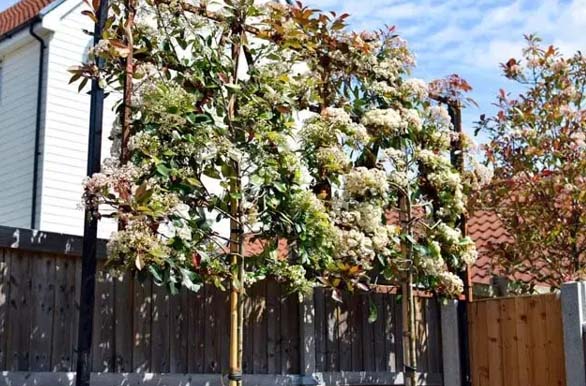
A pleached tree has a clear, straight stem with its branches trained flat onto a frame to form a raised panel of foliage. Planted in a line, the panels knit together to create a hedge on stilts. Most garden fences are about 1.8m tall, and the nursery grows its pleached trees on a 1.8m clear stem, so the screen begins roughly where the fence ends.
Because the foliage sits above head height, pleached trees take up very little ground space. That makes them well suited to:
- Adding privacy above existing fences and walls.
- Blocking views from overlooking windows.
- Small gardens where a full-width hedge would take too much room.
- Framing or dividing areas within a larger garden.
Species choice depends on whether year-round cover is the priority. Cherry Laurel and Photinia Red Robin are evergreen, so they screen through winter, with Photinia adding red new growth. Hornbeam gives a classic formal look, while Liquidambar, or Sweet Gum, is chosen for its colourful foliage. Both of these are deciduous.
"The most common mistake we see is assuming every pleached tree goes in at the same spacing," said Will Bodsworth of Hedging Plants Direct. "It depends on the width of the head on the trees you choose. Get that right and the panels join up neatly to form a continuous screen."
Spacing should be worked out from the head width of the specific trees supplied. A row of trees with heads around 1.2m wide will need setting out differently from trees trained onto 1.5m frames, for example.
The nursery’s pleached trees are pot grown, so they can be planted for much of the year as long as the ground is not frozen or waterlogged. Autumn to spring is usually the easiest time, when cooler weather and natural rainfall help new trees settle.
Homeowners comparing species, sizes and growth rates can see the nursery’s full selection of pleached trees for gardens across the UK.
For gardens where privacy is needed above the fence line rather than along the ground, a row of pleached trees planted this winter can make an immediate difference.