23 July 2026 | Granta Automation
Manual vs Automated Palletising: What the True Costs Look Like
Comparing manual and automated palletising isn't just a question of machinery cost versus wages - it involves throughput consistency, workplace safety and long-term operational risk. Granta Automation sets out how the two approaches really compare.
Choosing between manual and automated palletising is rarely as simple as comparing the price of a machine against the cost of wages. A fuller picture needs to weigh up ongoing cost stability, consistency of output, and workplace safety.
Manual palletising has low upfront cost but highly variable ongoing costs, shaped by agency staffing premiums, recruitment overheads and constant staff turnover in physically demanding roles. Output also tends to decline over the course of a shift as fatigue sets in, making planning and forecasting harder. Automated systems, by contrast, involve a higher upfront investment but far more predictable running costs, and can sustain a fixed, programmable rate across an entire shift without a drop in performance.
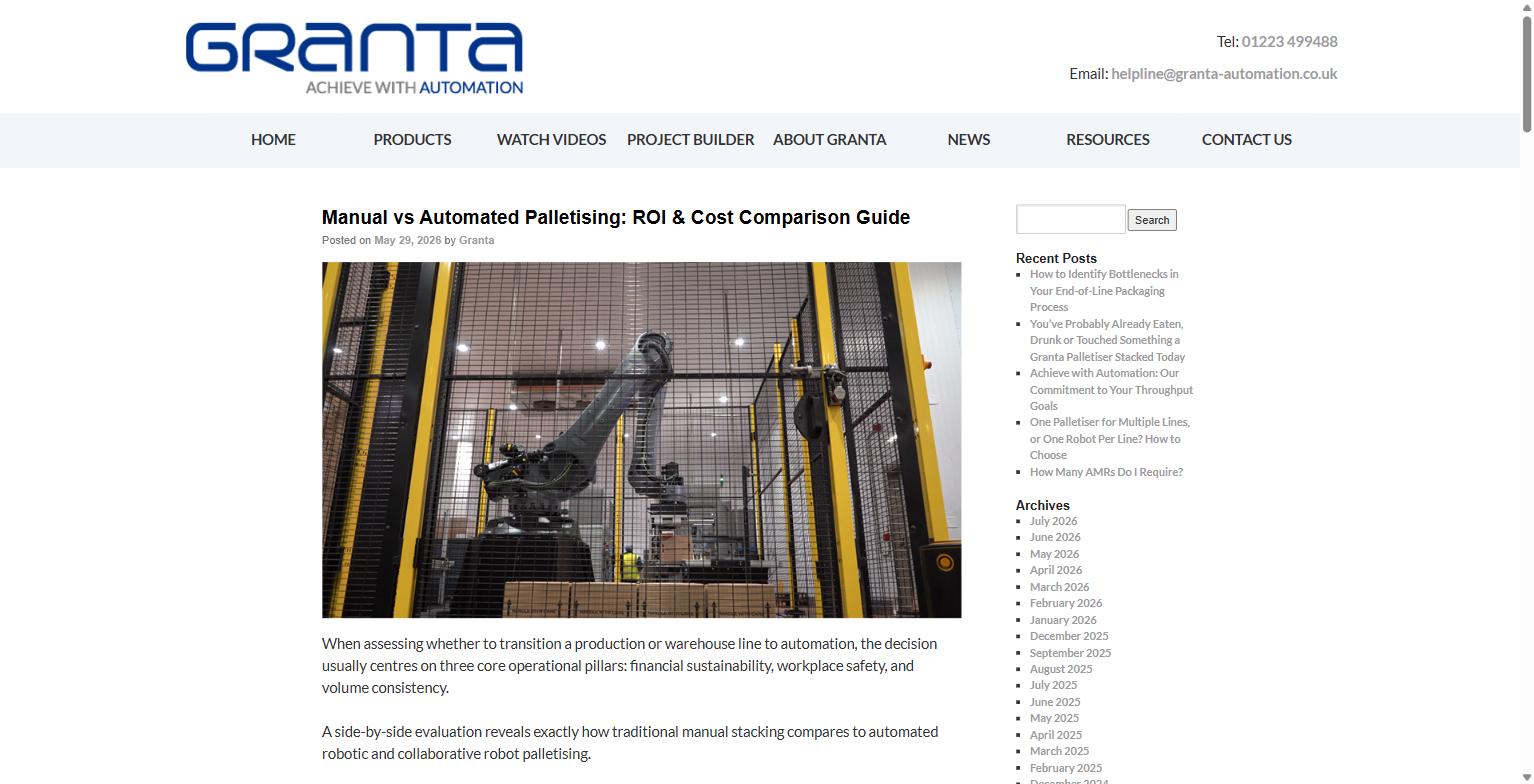
Workplace safety is another major factor. Manual palletising is a well-known source of repetitive strain injuries and musculoskeletal problems, carrying both a human cost and a financial one through sick leave and insurance premiums. Automated systems remove people from the physical lifting entirely, using safety fencing or, in the case of cobots, sensors that stop the robot the moment contact is detected.
When the full picture is considered - reduced product damage, lower staff turnover, fewer safety incidents and more predictable output - many UK manufacturers find that a robotic palletising system pays for itself within twelve to eighteen months, sometimes faster.
Granta Automation helps manufacturers compare these options against their own figures rather than generic assumptions. Visit our website and contact us today to talk through the numbers for your operation.