05 November 2026 | Meritics Ltd
Controlling Advanced Ceramic Powder Quality with Particle Size Analysis
For advanced ceramic manufacturers, powder quality can have a direct impact on the performance and consistency of the finished product. But how do you know whether your ceramic powder is truly within specification?
Particle size distribution (PSD) is a critical quality parameter, influencing green density, green strength and shrinkage, yet controlling it can present several challenges. Ultra-fine ceramic powders can be difficult to measure, large numbers of production samples can make routine testing time-consuming, and unexpected coarse particles or agglomerates can be difficult to investigate.
At Meritics, we understand that particle characterisation needs to provide more than a number on a report. It needs to help you understand what is happening within your material.
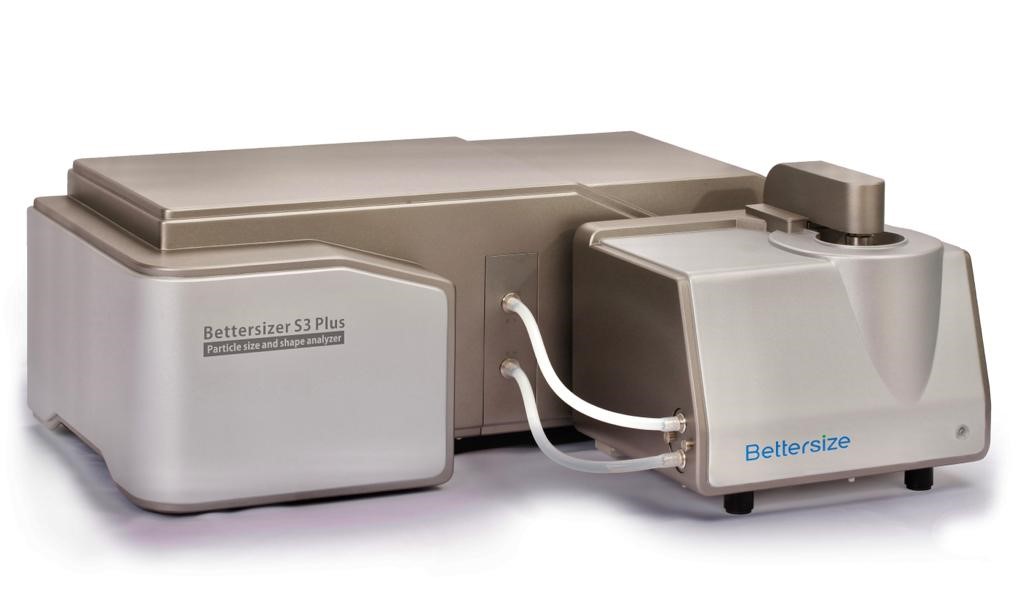
The Bettersizer S3 Plus combines laser diffraction with dynamic image analysis, providing complementary information about particle size and particle morphology. Laser diffraction offers high-resolution measurement, including submicron particles, while dynamic imaging can capture and visualise oversized particles and agglomerates.
Automation can also make a significant difference to laboratory efficiency. In one application study, 60 alumina samples were automatically analysed using the Bettersizer S3 Plus and BT-A60 autosampler. The system used barcoded samples and pre-defined SOPs to automate the measurement sequence, with good reproducibility demonstrated across repeated samples.
The technology can also help investigate powder mixing. Testing samples taken from different locations in mixed alumina powders showed significant variation following dry mixing, while wet-mixed samples produced much more consistent particle-size results.
Perhaps most importantly, dynamic image analysis can help answer the question “Are those oversized particles really there?” In the study, imaging confirmed irregular alumina agglomerates within an abnormal 6–20 µm particle population.
For ceramic manufacturers, combining accurate particle sizing with visual particle information can provide a more complete picture of powder quality — helping turn particle analysis from a routine measurement into a valuable process-control tool.